
Boiler Repair Cost: How Poor Installation Can Lead to Expensive Faults
A boiler that breaks down repeatedly can become expensive, particularly when the problem appears not long after installation. While some faults are simply the result of component failure or normal wear, installation quality can also influence how reliably a heating system operates.

Why you can trust our content
We understand that the boiler industry can be confusing, with plenty of outdated or misleading information. That’s why we rely only on trusted, proven sources to guide our advice and installations:
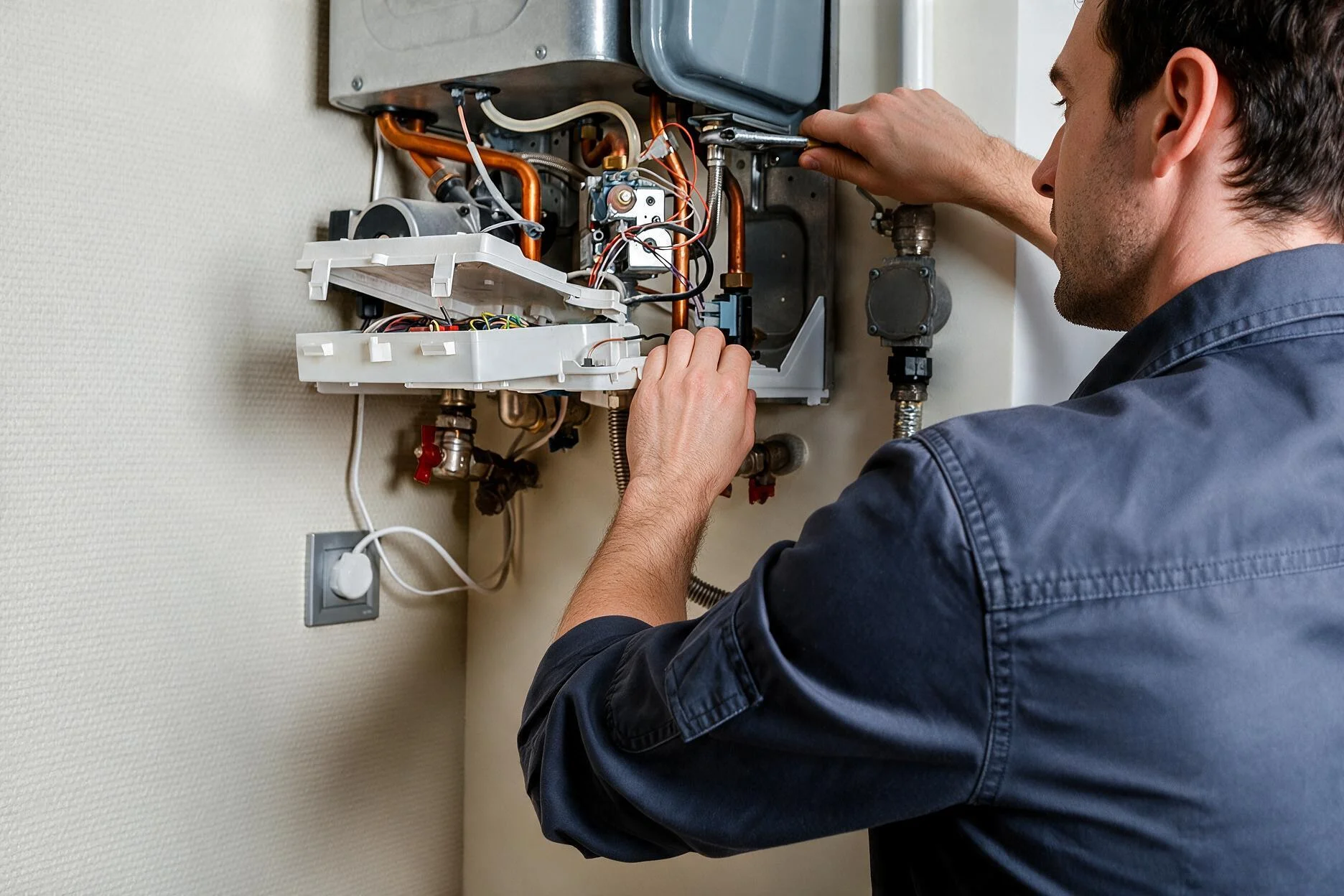
Poorly configured controls, inadequate system preparation, unsuitable pipework or incomplete commissioning can all create problems that may only become obvious once the boiler has been running for some time.
Understanding the relationship between installation quality and the boiler repair cost can help homeowners recognise warning signs early and make more informed decisions when replacing or repairing a heating system.
If you are dealing with recurring boiler faults and are unsure what is causing them, contact Origin GPH for professional guidance and an assessment of the heating system.
Can poor installation really increase boiler repair costs?
Yes. An installation that does not meet the manufacturer’s requirements or properly account for the wider heating system can contribute to operational problems.
The boiler is part of a larger system. It depends on suitable pipework, controls, circulation, electrical connections, flue arrangements and system water quality.
Potential installation-related problems include:
- Incorrect system pressure
- Poor circulation
- Inadequate system cleaning
- Incorrect controls or configuration
- Unsuitable pipework
- Flue-related problems
- Condensate drainage issues
- Incomplete commissioning
- Incorrect boiler settings
Not every fault after installation is caused by the installer. A qualified engineer needs to diagnose the actual cause before responsibility can be established.
What types of faults can installation problems contribute to?
The symptoms can vary considerably.
For example, poor circulation may cause uneven heating or unusual boiler behaviour, while system contamination can affect components and reduce heating performance.
Other warning signs can include:
|
Symptom |
What may need checking |
|
Repeated lockouts |
Boiler, gas supply or system conditions |
|
Pressure loss |
Leaks or pressure-related components |
|
Poor heating |
Circulation, balancing or system condition |
|
Noisy operation |
Air, circulation or component issues |
|
Recurring fault codes |
Appliance or installation |
|
Inconsistent hot water |
Boiler, controls or water supply |
|
Leaking condensate |
Drainage arrangement |
|
Control problems |
Thermostat, wiring or configuration |
These symptoms do not provide a diagnosis on their own. The same problem can have several possible causes.
Why does system preparation matter?
When a new boiler is connected to an older heating system, the condition of the existing circuit matters.
Central heating systems can contain sludge, magnetite and other debris. If the system is heavily contaminated, this can interfere with circulation and potentially affect components.
Appropriate cleaning may therefore be recommended before or during boiler replacement.
However, there is no universal rule that every new boiler requires a full powerflush. The correct approach depends on the condition of the system.
A professional installer should assess the system and explain what preparation is appropriate.
What kind of fuel does your boiler use?
Mains Gas
LPG
It just takes 2 minutes
And then you can book a free consultation
How can incorrect system pressure create problems?
Heating systems operate within a particular pressure range, and the appropriate range varies depending on the system.
If pressure repeatedly falls, there may be an underlying problem such as a leak or an issue with a component.
Repeatedly topping up the system without investigating the cause is not a long-term solution.
Likewise, excessive pressure can indicate another issue that needs professional attention.
The homeowner should be shown what normal pressure looks like during the installation handover. This makes it easier to recognise when something has changed.
Can poor commissioning affect reliability?
It can.
Commissioning is the process of checking that the boiler and installation are operating correctly after the appliance has been fitted.
This should be carried out in line with the manufacturer’s requirements.
A proper commissioning process can help identify issues before the installer leaves, rather than allowing them to become recurring faults later.
Checks may cover the boiler, controls, system operation, combustion and other installation-specific requirements.
If commissioning is rushed or incomplete, an issue may remain unnoticed until the system is under normal day-to-day use.
Why can controls be mistaken for boiler faults?
Heating controls can sometimes create symptoms that look like a boiler problem.
For example, if a thermostat is incorrectly configured or not communicating with the boiler, the heating may fail to operate when expected.
A homeowner may assume the boiler has broken down when the underlying issue is actually related to the control system.
This is why the installer should demonstrate the controls during handover and explain how the heating schedule and temperature settings work.
If a new boiler appears unreliable, both the appliance and its controls should be considered during diagnosis.
Origin GPH can investigate boiler and heating system problems rather than assuming every fault comes from the appliance itself. Contact our team if you are experiencing recurring issues or unexpected heating performance.
Can unsuitable pipework contribute to faults?
Potentially.
The boiler must be connected to a suitable gas supply and heating system. Existing pipework may sometimes be reused, but it should be assessed for suitability.
Changes may be required where the existing arrangement does not meet the requirements of the replacement appliance or installation.
Poorly planned pipework can also make future servicing and maintenance more difficult.
This is one reason why a proper property assessment can be more valuable than providing a generic replacement price without considering the existing system.
What about flue and condensate problems?
The flue is a critical safety component and must be installed according to the appliance manufacturer’s requirements and applicable regulations.
The condensate pipe also needs to be installed correctly so that water produced during boiler operation can drain safely.
Problems with either can affect boiler operation and may result in fault codes or shutdowns.
Homeowners should never attempt to alter a boiler flue or gas-related components themselves. Any concerns should be assessed by an appropriately qualified professional.
Why can a cheap installation become expensive later?
A low initial price may be attractive, but the real cost can increase if important work has been omitted or the installation has not been properly completed.
For example, an apparently inexpensive installation may not include suitable controls, necessary pipework alterations or appropriate system preparation.
If problems then develop, the homeowner may face additional investigation and repair costs.
This does not mean the cheapest quotation is automatically poor. It means the scope of work should be compared carefully.
The true boiler repair cost should be considered alongside the quality of the original installation and the condition of the wider heating system.
How much can emergency repairs add to the overall cost?
Emergency call-outs can be more expensive than planned repairs because they may involve urgent attendance outside normal working hours.
The emergency boiler repair cost will depend on the fault, time of attendance, parts required and complexity of the repair.
There is no reliable single figure because boiler faults vary considerably.
For example, replacing a relatively simple component may be very different from diagnosing a complex electrical or system problem.
The best way to control unexpected costs is not to delay a developing fault until the boiler fails completely.
What warning signs should homeowners act on?
Small changes in performance can sometimes provide useful early warnings.
Pay attention if:
- The boiler begins making unusual noises.
- The same fault code appears repeatedly.
- Heating becomes less consistent.
- Pressure drops regularly.
- Hot water becomes unreliable.
- Radiators heat unevenly.
- The boiler repeatedly switches off.
- You notice water around the appliance or pipework.
Early professional assessment may identify a relatively manageable problem before it becomes a more disruptive breakdown.
What should you do after a poor installation?
If you believe a recent installation has caused recurring problems, keep records of what has happened.
Record:
- Dates when faults occurred
- Fault codes displayed
- Changes in system pressure
- Repairs already completed
- Installation documents
- Boiler model information
- Servicing records
If the original installer is still available, explain the symptoms and ask them to assess the installation.
If you are concerned about the quality or safety of gas work, arrange an assessment with an appropriately qualified Gas Safe registered engineer.
A typical Glasgow example
Consider a homeowner who has had a new boiler installed but begins experiencing repeated pressure loss a few months later.
At first, the homeowner repeatedly tops up the system. The problem eventually becomes more frequent, and the boiler stops operating.
A qualified engineer investigates the heating system and finds that the pressure issue has an underlying cause requiring attention. The key lesson is that repeatedly correcting a symptom does not resolve the underlying fault.
Had the problem been investigated earlier, the homeowner may have avoided a more disruptive breakdown.
How can homeowners reduce the risk of expensive faults?
The best approach is to consider installation quality and long-term maintenance together.
When replacing a boiler:
- Choose an appropriately qualified installer.
- Ask for a detailed quotation.
- Confirm the exact boiler model.
- Ask whether system preparation is required.
- Check which controls are included.
- Confirm commissioning is included.
- Keep all installation documentation.
- Understand the warranty conditions.
- Arrange servicing as recommended.
- Investigate recurring problems promptly.
These steps cannot prevent every boiler fault, but they can reduce avoidable problems and make diagnosis easier when something does go wrong.
Frequently Asked Questions
The cheapest installation is not necessarily the lowest-cost option over the life of a boiler. If important preparation, suitable controls, correct commissioning or other installation requirements are overlooked, problems can become more expensive to resolve later.
Understanding the potential relationship between installation quality and boiler repair cost can help homeowners make better decisions from the beginning.
Similarly, recognising early warning signs can help prevent a manageable fault from becoming an urgent breakdown and potentially increasing the emergency boiler repair cost.
Origin GPH takes a practical approach to boiler installation and repair, focusing on identifying the underlying cause of heating problems rather than simply treating the visible symptom.
If your boiler is developing recurring faults or you are concerned about the quality of a recent installation, contact Origin GPH to discuss the problem and arrange professional assistance.
Related articles
What kind of fuel does your boiler use?
Mains Gas
LPG
At a glance
Poorly configured controls, inadequate system preparation, unsuitable pipework or incomplete commissioning can all create problems that may only become obvious once the boiler has been running for some time.
Understanding the relationship between installation quality and the boiler repair cost can help homeowners recognise warning signs early and make more informed decisions when replacing or repairing a heating system.
If you are dealing with recurring boiler faults and are unsure what is causing them, contact Origin GPH for professional guidance and an assessment of the heating system.
Can poor installation really increase boiler repair costs?
Yes. An installation that does not meet the manufacturer’s requirements or properly account for the wider heating system can contribute to operational problems.
The boiler is part of a larger system. It depends on suitable pipework, controls, circulation, electrical connections, flue arrangements and system water quality.
Potential installation-related problems include:
- Incorrect system pressure
- Poor circulation
- Inadequate system cleaning
- Incorrect controls or configuration
- Unsuitable pipework
- Flue-related problems
- Condensate drainage issues
- Incomplete commissioning
- Incorrect boiler settings
Not every fault after installation is caused by the installer. A qualified engineer needs to diagnose the actual cause before responsibility can be established.
What types of faults can installation problems contribute to?
The symptoms can vary considerably.
For example, poor circulation may cause uneven heating or unusual boiler behaviour, while system contamination can affect components and reduce heating performance.
Other warning signs can include:
|
Symptom |
What may need checking |
|
Repeated lockouts |
Boiler, gas supply or system conditions |
|
Pressure loss |
Leaks or pressure-related components |
|
Poor heating |
Circulation, balancing or system condition |
|
Noisy operation |
Air, circulation or component issues |
|
Recurring fault codes |
Appliance or installation |
|
Inconsistent hot water |
Boiler, controls or water supply |
|
Leaking condensate |
Drainage arrangement |
|
Control problems |
Thermostat, wiring or configuration |
These symptoms do not provide a diagnosis on their own. The same problem can have several possible causes.
Why does system preparation matter?
When a new boiler is connected to an older heating system, the condition of the existing circuit matters.
Central heating systems can contain sludge, magnetite and other debris. If the system is heavily contaminated, this can interfere with circulation and potentially affect components.
Appropriate cleaning may therefore be recommended before or during boiler replacement.
However, there is no universal rule that every new boiler requires a full powerflush. The correct approach depends on the condition of the system.
A professional installer should assess the system and explain what preparation is appropriate.
What kind of fuel does your boiler use?
Mains Gas
LPG
It just takes 2 minutes
And then you can book a free consultation
How can incorrect system pressure create problems?
Heating systems operate within a particular pressure range, and the appropriate range varies depending on the system.
If pressure repeatedly falls, there may be an underlying problem such as a leak or an issue with a component.
Repeatedly topping up the system without investigating the cause is not a long-term solution.
Likewise, excessive pressure can indicate another issue that needs professional attention.
The homeowner should be shown what normal pressure looks like during the installation handover. This makes it easier to recognise when something has changed.
Can poor commissioning affect reliability?
It can.
Commissioning is the process of checking that the boiler and installation are operating correctly after the appliance has been fitted.
This should be carried out in line with the manufacturer’s requirements.
A proper commissioning process can help identify issues before the installer leaves, rather than allowing them to become recurring faults later.
Checks may cover the boiler, controls, system operation, combustion and other installation-specific requirements.
If commissioning is rushed or incomplete, an issue may remain unnoticed until the system is under normal day-to-day use.
Why can controls be mistaken for boiler faults?
Heating controls can sometimes create symptoms that look like a boiler problem.
For example, if a thermostat is incorrectly configured or not communicating with the boiler, the heating may fail to operate when expected.
A homeowner may assume the boiler has broken down when the underlying issue is actually related to the control system.
This is why the installer should demonstrate the controls during handover and explain how the heating schedule and temperature settings work.
If a new boiler appears unreliable, both the appliance and its controls should be considered during diagnosis.
Origin GPH can investigate boiler and heating system problems rather than assuming every fault comes from the appliance itself. Contact our team if you are experiencing recurring issues or unexpected heating performance.
Can unsuitable pipework contribute to faults?
Potentially.
The boiler must be connected to a suitable gas supply and heating system. Existing pipework may sometimes be reused, but it should be assessed for suitability.
Changes may be required where the existing arrangement does not meet the requirements of the replacement appliance or installation.
Poorly planned pipework can also make future servicing and maintenance more difficult.
This is one reason why a proper property assessment can be more valuable than providing a generic replacement price without considering the existing system.
What about flue and condensate problems?
The flue is a critical safety component and must be installed according to the appliance manufacturer’s requirements and applicable regulations.
The condensate pipe also needs to be installed correctly so that water produced during boiler operation can drain safely.
Problems with either can affect boiler operation and may result in fault codes or shutdowns.
Homeowners should never attempt to alter a boiler flue or gas-related components themselves. Any concerns should be assessed by an appropriately qualified professional.
Why can a cheap installation become expensive later?
A low initial price may be attractive, but the real cost can increase if important work has been omitted or the installation has not been properly completed.
For example, an apparently inexpensive installation may not include suitable controls, necessary pipework alterations or appropriate system preparation.
If problems then develop, the homeowner may face additional investigation and repair costs.
This does not mean the cheapest quotation is automatically poor. It means the scope of work should be compared carefully.
The true boiler repair cost should be considered alongside the quality of the original installation and the condition of the wider heating system.
How much can emergency repairs add to the overall cost?
Emergency call-outs can be more expensive than planned repairs because they may involve urgent attendance outside normal working hours.
The emergency boiler repair cost will depend on the fault, time of attendance, parts required and complexity of the repair.
There is no reliable single figure because boiler faults vary considerably.
For example, replacing a relatively simple component may be very different from diagnosing a complex electrical or system problem.
The best way to control unexpected costs is not to delay a developing fault until the boiler fails completely.
What warning signs should homeowners act on?
Small changes in performance can sometimes provide useful early warnings.
Pay attention if:
- The boiler begins making unusual noises.
- The same fault code appears repeatedly.
- Heating becomes less consistent.
- Pressure drops regularly.
- Hot water becomes unreliable.
- Radiators heat unevenly.
- The boiler repeatedly switches off.
- You notice water around the appliance or pipework.
Early professional assessment may identify a relatively manageable problem before it becomes a more disruptive breakdown.
What should you do after a poor installation?
If you believe a recent installation has caused recurring problems, keep records of what has happened.
Record:
- Dates when faults occurred
- Fault codes displayed
- Changes in system pressure
- Repairs already completed
- Installation documents
- Boiler model information
- Servicing records
If the original installer is still available, explain the symptoms and ask them to assess the installation.
If you are concerned about the quality or safety of gas work, arrange an assessment with an appropriately qualified Gas Safe registered engineer.
A typical Glasgow example
Consider a homeowner who has had a new boiler installed but begins experiencing repeated pressure loss a few months later.
At first, the homeowner repeatedly tops up the system. The problem eventually becomes more frequent, and the boiler stops operating.
A qualified engineer investigates the heating system and finds that the pressure issue has an underlying cause requiring attention. The key lesson is that repeatedly correcting a symptom does not resolve the underlying fault.
Had the problem been investigated earlier, the homeowner may have avoided a more disruptive breakdown.
How can homeowners reduce the risk of expensive faults?
The best approach is to consider installation quality and long-term maintenance together.
When replacing a boiler:
- Choose an appropriately qualified installer.
- Ask for a detailed quotation.
- Confirm the exact boiler model.
- Ask whether system preparation is required.
- Check which controls are included.
- Confirm commissioning is included.
- Keep all installation documentation.
- Understand the warranty conditions.
- Arrange servicing as recommended.
- Investigate recurring problems promptly.
These steps cannot prevent every boiler fault, but they can reduce avoidable problems and make diagnosis easier when something does go wrong.
Frequently Asked Questions
The cheapest installation is not necessarily the lowest-cost option over the life of a boiler. If important preparation, suitable controls, correct commissioning or other installation requirements are overlooked, problems can become more expensive to resolve later.
Understanding the potential relationship between installation quality and boiler repair cost can help homeowners make better decisions from the beginning.
Similarly, recognising early warning signs can help prevent a manageable fault from becoming an urgent breakdown and potentially increasing the emergency boiler repair cost.
Origin GPH takes a practical approach to boiler installation and repair, focusing on identifying the underlying cause of heating problems rather than simply treating the visible symptom.
If your boiler is developing recurring faults or you are concerned about the quality of a recent installation, contact Origin GPH to discuss the problem and arrange professional assistance.