Boiler Replacement vs Repair: Which Is Better for Reliability?
When a boiler starts showing signs of trouble, many homeowners face the same question: should it be repaired, or is it time to replace it altogether? The answer is not always straightforward. While a repair may seem like the quicker option, reliability over the long term often tells a different story.

Why you can trust our content
We understand that the boiler industry can be confusing, with plenty of outdated or misleading information. That’s why we rely only on trusted, proven sources to guide our advice and installations:
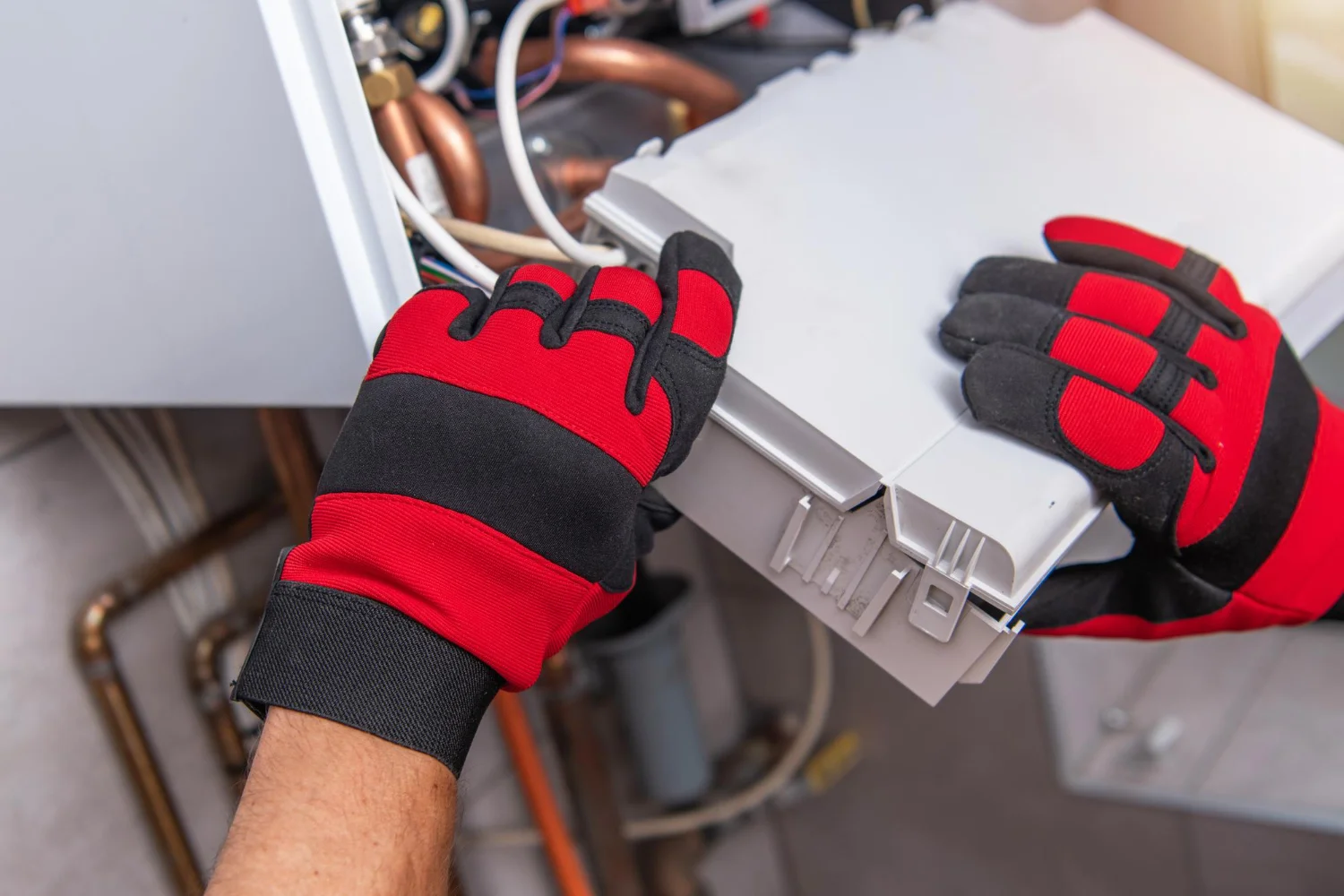
For homeowners across Glasgow, understanding how repairs and replacements compare can help avoid repeated breakdowns, rising bills, and unnecessary stress. This guide looks at both options through the lens of reliability, not just short-term convenience.
If your boiler has become unreliable, speaking with a heating professional can help you understand which option suits your home best.
What does reliability really mean for a boiler?
Reliability is about more than whether a boiler works today. A reliable system delivers consistent heating, operates efficiently, and is unlikely to fail during peak demand.
Key indicators of boiler reliability include:
- Stable performance throughout the year
- Minimal need for repeat callouts
- Predictable running costs
- Safe and efficient operation
When assessing repair versus replacement, reliability should be considered alongside upfront expense.
What kind of fuel does your boiler use?
Mains Gas
LPG
It just takes 2 minutes
And then you can book a free consultation
When does boiler repair make sense?
Repair is often suitable when the boiler is relatively new and the fault is isolated. Minor issues such as sensor faults or valve replacements can usually be resolved quickly.
Repair may be appropriate if:
- The boiler is under seven years old
- The issue is a one-off fault
- Efficiency remains good
- Parts are readily available
In these cases, a repair can restore performance without affecting long-term reliability.
Why repeated repairs reduce reliability
As boilers age, repairs tend to become more frequent. Each repair may solve a single issue, but it does not address overall wear.
Over time, this can lead to:
- Increased likelihood of further breakdowns
- Inconsistent heating and hot water
- Rising boiler repair cost due to repeated labour and parts
At this stage, reliability often declines even if the boiler technically remains operational.
How does boiler age affect repair decisions?
Boilers over ten years old typically experience declining efficiency and component fatigue. While repairs may still be possible, they often become less cost-effective.
Older boilers also lack modern controls and safety features, which can further impact performance and reliability over time.
When is boiler replacement the better option?
Replacement becomes the more reliable choice when repairs no longer provide lasting results. This is especially true if faults recur or efficiency remains poor.
Replacement is often the better option when:
- Breakdowns happen regularly
- Repair costs are increasing year on year
- Parts are becoming obsolete
- Heating performance is inconsistent
In these situations, investing in reliability can reduce long-term disruption.
Understanding boiler replacement cost vs ongoing repairs
While replacement involves a higher upfront investment, it often delivers improved reliability and predictable performance. Comparing ongoing repairs with boiler replacement cost helps homeowners assess the true value over time.
Modern boilers are designed to operate efficiently with fewer faults, reducing both energy usage and unexpected breakdowns.
Repair vs replacement: reliability comparison
|
Factor |
Repairing an Older Boiler |
Replacing the Boiler |
|
Reliability |
Declining over time |
Consistent |
|
Breakdown risk |
Increasing |
Lower |
|
Efficiency |
Often reduced |
High |
|
Long-term costs |
Unpredictable |
More predictable |
This comparison highlights why reliability often favours replacement once a boiler reaches a certain age.
Is combi boiler replacement more reliable?
For many homes, upgrading through combi boiler replacement Glasgow homeowners choose can significantly improve reliability. Combi boilers remove the need for separate tanks and cylinders, reducing potential failure points.
Benefits include:
- Faster hot water delivery
- Improved pressure stability
- Fewer components to maintain
When installed correctly, modern combi boilers offer strong long-term reliability for most property types.
What about newer boilers that still break down?
Even newer boilers can develop faults, particularly if servicing has been missed. In these cases, repair is usually the sensible option, as the underlying system is still sound.
However, repeated faults on a relatively new boiler may indicate installation or sizing issues, which should be reviewed carefully.
Case example: A common Glasgow decision
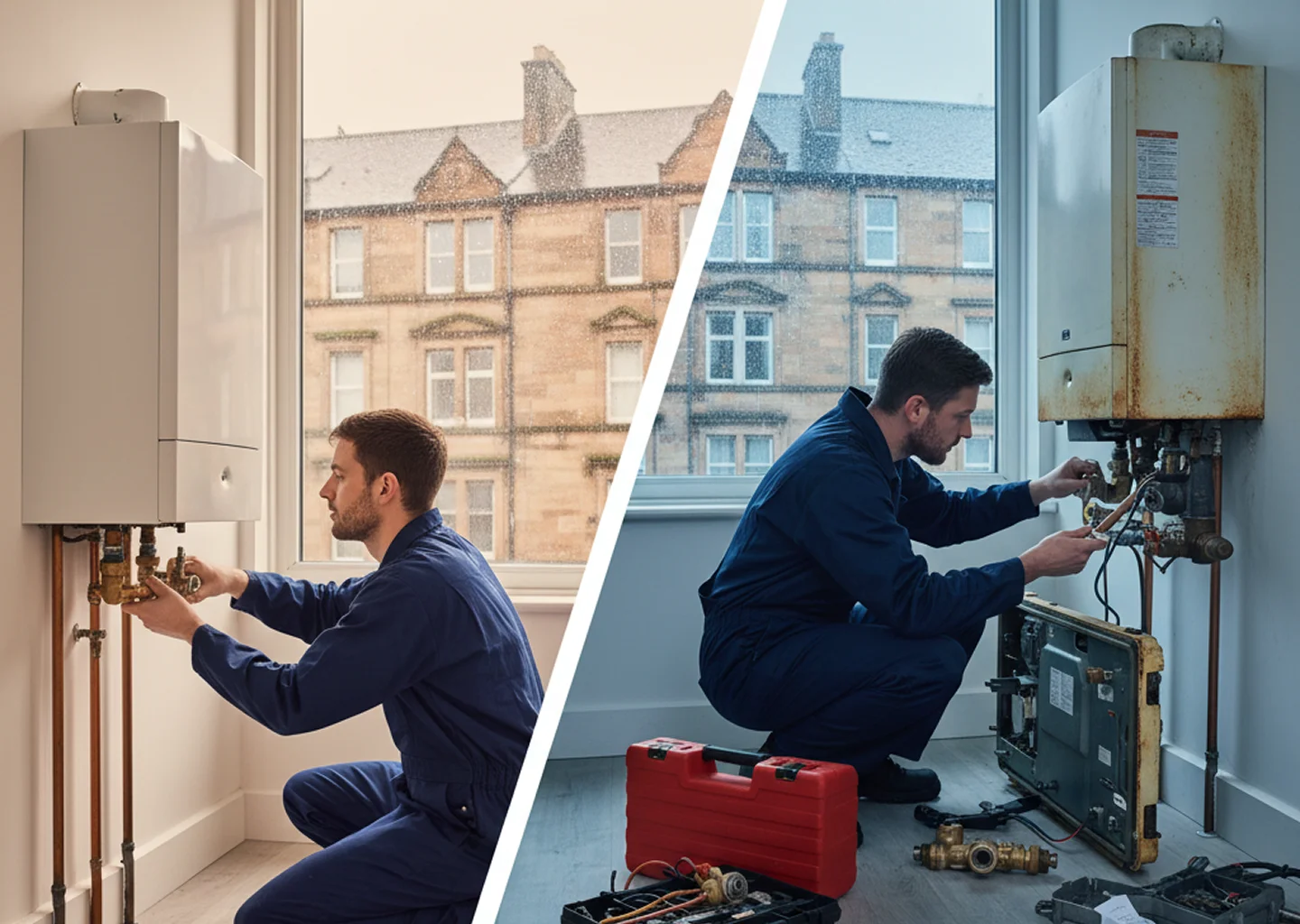
In a Glasgow terraced home, the homeowner faced multiple winter breakdowns from a twelve-year-old boiler. While each repair restored heating temporarily, faults kept returning.
After reviewing annual repair costs against replacement options, the homeowner opted for a combi boiler replacement Glasgow properties often benefit from. The new system provided consistent heating, improved efficiency, and reduced ongoing maintenance concerns.
How Origin helps homeowners choose reliably
At Origin, the focus is on helping homeowners choose the most reliable option for their situation. Rather than defaulting to repair or replacement, our team assesses system condition, usage patterns, and future needs.
If you are unsure whether repairing or replacing your boiler is the better long-term choice, our engineers can offer clear, practical advice.
Frequently Asked Questions
Making the right choice for long-term reliability
Deciding between boiler repair and replacement is ultimately about reliability, not just short-term cost. While repairs suit newer systems with isolated faults, replacement often provides greater peace of mind once a boiler begins to age.
For Glasgow homeowners, understanding this balance helps avoid repeated disruption and ensures heating systems remain dependable year after year. To make an informed decision about your boiler’s future, you can contact Origin for expert guidance tailored to your home and heating needs.
Related articles
What kind of fuel does your boiler use?
Mains Gas
LPG
At a glance
For homeowners across Glasgow, understanding how repairs and replacements compare can help avoid repeated breakdowns, rising bills, and unnecessary stress. This guide looks at both options through the lens of reliability, not just short-term convenience.
If your boiler has become unreliable, speaking with a heating professional can help you understand which option suits your home best.
What does reliability really mean for a boiler?
Reliability is about more than whether a boiler works today. A reliable system delivers consistent heating, operates efficiently, and is unlikely to fail during peak demand.
Key indicators of boiler reliability include:
- Stable performance throughout the year
- Minimal need for repeat callouts
- Predictable running costs
- Safe and efficient operation
When assessing repair versus replacement, reliability should be considered alongside upfront expense.
What kind of fuel does your boiler use?
Mains Gas
LPG
It just takes 2 minutes
And then you can book a free consultation
When does boiler repair make sense?
Repair is often suitable when the boiler is relatively new and the fault is isolated. Minor issues such as sensor faults or valve replacements can usually be resolved quickly.
Repair may be appropriate if:
- The boiler is under seven years old
- The issue is a one-off fault
- Efficiency remains good
- Parts are readily available
In these cases, a repair can restore performance without affecting long-term reliability.
Why repeated repairs reduce reliability
As boilers age, repairs tend to become more frequent. Each repair may solve a single issue, but it does not address overall wear.
Over time, this can lead to:
- Increased likelihood of further breakdowns
- Inconsistent heating and hot water
- Rising boiler repair cost due to repeated labour and parts
At this stage, reliability often declines even if the boiler technically remains operational.
How does boiler age affect repair decisions?
Boilers over ten years old typically experience declining efficiency and component fatigue. While repairs may still be possible, they often become less cost-effective.
Older boilers also lack modern controls and safety features, which can further impact performance and reliability over time.
When is boiler replacement the better option?
Replacement becomes the more reliable choice when repairs no longer provide lasting results. This is especially true if faults recur or efficiency remains poor.
Replacement is often the better option when:
- Breakdowns happen regularly
- Repair costs are increasing year on year
- Parts are becoming obsolete
- Heating performance is inconsistent
In these situations, investing in reliability can reduce long-term disruption.
Understanding boiler replacement cost vs ongoing repairs
While replacement involves a higher upfront investment, it often delivers improved reliability and predictable performance. Comparing ongoing repairs with boiler replacement cost helps homeowners assess the true value over time.
Modern boilers are designed to operate efficiently with fewer faults, reducing both energy usage and unexpected breakdowns.
Repair vs replacement: reliability comparison
|
Factor |
Repairing an Older Boiler |
Replacing the Boiler |
|
Reliability |
Declining over time |
Consistent |
|
Breakdown risk |
Increasing |
Lower |
|
Efficiency |
Often reduced |
High |
|
Long-term costs |
Unpredictable |
More predictable |
This comparison highlights why reliability often favours replacement once a boiler reaches a certain age.
Is combi boiler replacement more reliable?
For many homes, upgrading through combi boiler replacement Glasgow homeowners choose can significantly improve reliability. Combi boilers remove the need for separate tanks and cylinders, reducing potential failure points.
Benefits include:
- Faster hot water delivery
- Improved pressure stability
- Fewer components to maintain
When installed correctly, modern combi boilers offer strong long-term reliability for most property types.
What about newer boilers that still break down?
Even newer boilers can develop faults, particularly if servicing has been missed. In these cases, repair is usually the sensible option, as the underlying system is still sound.
However, repeated faults on a relatively new boiler may indicate installation or sizing issues, which should be reviewed carefully.
Case example: A common Glasgow decision
In a Glasgow terraced home, the homeowner faced multiple winter breakdowns from a twelve-year-old boiler. While each repair restored heating temporarily, faults kept returning.
After reviewing annual repair costs against replacement options, the homeowner opted for a combi boiler replacement Glasgow properties often benefit from. The new system provided consistent heating, improved efficiency, and reduced ongoing maintenance concerns.
How Origin helps homeowners choose reliably
At Origin, the focus is on helping homeowners choose the most reliable option for their situation. Rather than defaulting to repair or replacement, our team assesses system condition, usage patterns, and future needs.
If you are unsure whether repairing or replacing your boiler is the better long-term choice, our engineers can offer clear, practical advice.
Frequently Asked Questions
Making the right choice for long-term reliability
Deciding between boiler repair and replacement is ultimately about reliability, not just short-term cost. While repairs suit newer systems with isolated faults, replacement often provides greater peace of mind once a boiler begins to age.
For Glasgow homeowners, understanding this balance helps avoid repeated disruption and ensures heating systems remain dependable year after year. To make an informed decision about your boiler’s future, you can contact Origin for expert guidance tailored to your home and heating needs.