Combi Boiler Installation Glasgow: Planning Around Hot Water Demand
A combi boiler can be an excellent option for homes that want heating and hot water from one compact appliance. However, choosing the right system is not simply about finding a boiler that fits the available space.

Why you can trust our content
We understand that the boiler industry can be confusing, with plenty of outdated or misleading information. That’s why we rely only on trusted, proven sources to guide our advice and installations:

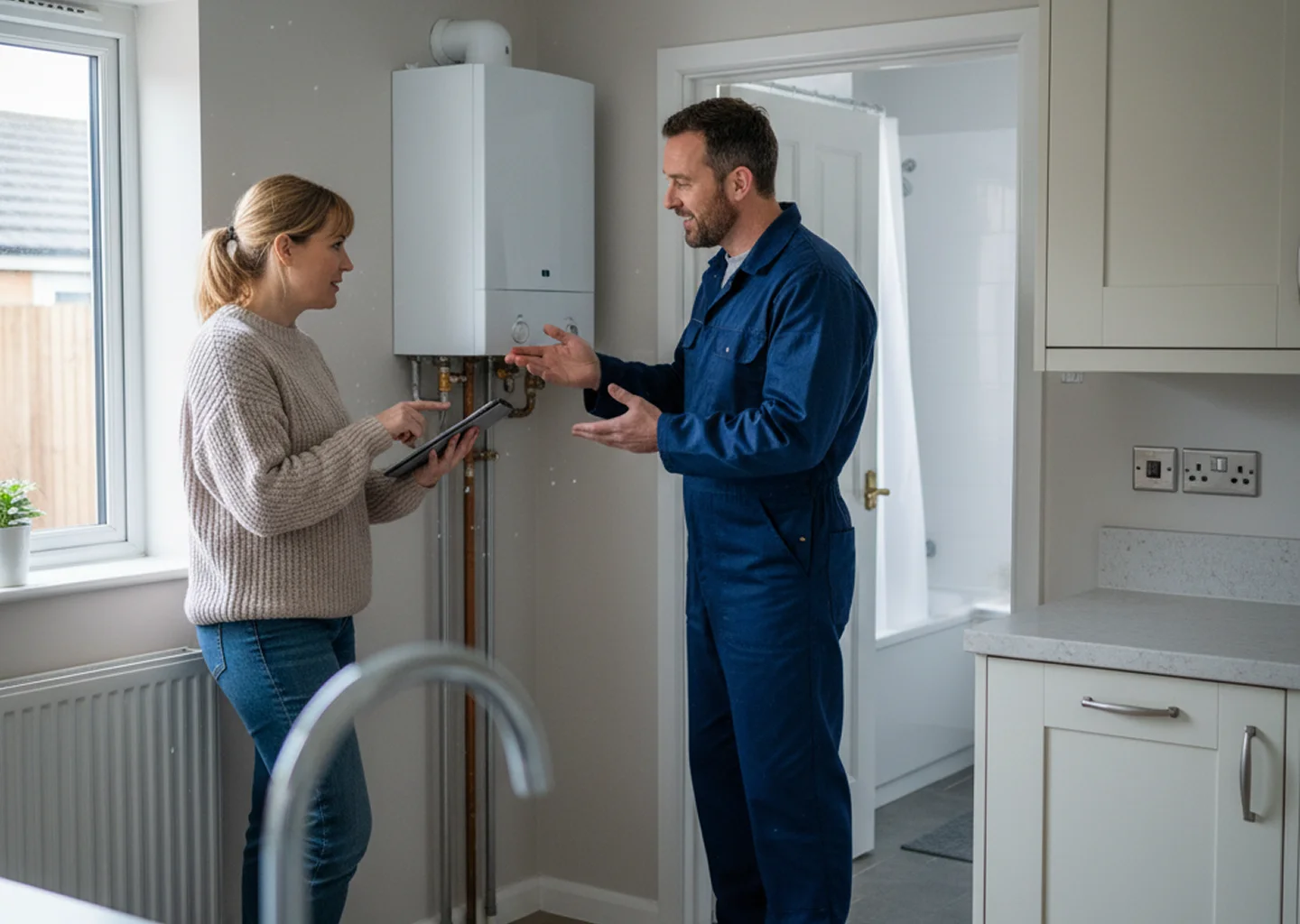
Hot water demand should be one of the main considerations. A household with one bathroom and modest usage will have different requirements from a busy family where showers, taps and appliances are regularly used at the same time.
Planning around actual usage can help ensure the replacement boiler provides the performance your household expects, rather than simply replacing the existing appliance with another of the same size.
If you are considering changing your heating system, Origin GPH can assess your property’s heating and hot water requirements and advise on suitable options.
How Does a Combi Boiler Meet Your Hot Water Needs?
A combi boiler heats water directly from the mains whenever a hot tap or shower is used. Unlike a traditional system with a separate hot water cylinder, there is no stored tank supplying hot water around the clock.
This arrangement can save space and provide hot water on demand. However, performance depends partly on the incoming mains water flow and pressure.
The boiler also needs sufficient output to heat the incoming water to the required temperature. This means the right appliance should be selected according to the property’s circumstances rather than simply choosing the highest output available.
What Should You Check Before Choosing a Combi Boiler?
Several factors should be assessed before installation.
These include:
- Number of bathrooms
- Number of people in the household
- Typical shower usage
- Simultaneous hot water demand
- Incoming mains water pressure
- Available flow rate
- Existing heating requirements
- Boiler location
- Available flue route
- Existing pipework
These details help an installer determine whether a combi boiler is suitable and what specification is appropriate.
For example, a household may have enough heating capacity from a relatively modest boiler but still need a higher hot water output to deliver an acceptable shower performance.
Which fuel powers your boiler?
It just takes 2 minutes
And then you can book a free consultation
Is Your Mains Water Flow Rate Important?
Yes. A combi boiler can only provide hot water effectively if the incoming water supply can support the required flow.
A high-output appliance cannot necessarily compensate for poor mains flow. If the incoming supply is restricted, the expected hot water performance may not be achieved even when the boiler itself is capable of producing a higher flow rate.
An installer should therefore check the property’s water supply as part of the assessment.
This is particularly important when homeowners are comparing boiler prices and installation options. The most expensive or highest-output boiler is not automatically the best choice if the property cannot make full use of its capabilities.
How Many People Will Be Using Hot Water?
Household size can have a major influence on the suitability of a combi boiler.
A couple with one bathroom may have relatively predictable demand. A larger household may have several people showering in the morning, using kitchen taps and running other appliances at similar times.
Think about your normal routine rather than an occasional peak.
Ask yourself:
- How many people regularly use the property?
- How many bathrooms are there?
- Are showers commonly used at the same time?
- Does the household have high morning demand?
- Are there plans for additional bathrooms or changes to the property?
These questions help establish whether a combi system is likely to provide the desired level of performance.
Can a Combi Boiler Still Work Well in a Larger Home?
It can, depending on the property’s water supply and hot water requirements.
Property size alone does not determine whether a combi boiler is suitable. A larger home with one bathroom and moderate hot water usage may have very different requirements from a smaller property with several bathrooms and heavy simultaneous demand.
The heating output also needs to be assessed separately from hot water output.
This distinction matters because selecting a boiler solely according to the number of rooms can lead to an appliance that is not properly matched to either heating or hot water demand.
What Does Installation Involve?
A standard combi replacement can sometimes be relatively straightforward when the new appliance is installed in the same location and existing infrastructure is suitable.
However, installation requirements vary between properties.
Potential considerations include:
|
Installation factor |
Why it matters |
|
Boiler position |
Determines access and installation requirements |
|
Flue route |
Must meet applicable requirements |
|
Pipework |
May need modification for the new appliance |
|
Gas supply |
Needs to be suitable for the boiler |
|
Mains water |
Flow and pressure affect hot water performance |
|
Controls |
May need upgrading or replacing |
|
Condensate drainage |
Must be suitable for the installation |
|
Existing system |
May require checks or remedial work |
A professional assessment should identify these factors before the installation begins.
If you are unsure whether your current system is suitable for replacement with a combi boiler, speak to Origin GPH. The team can assess the existing installation and explain what changes may be required.
Should You Choose a Larger Boiler for Better Hot Water?
Not necessarily.
It can be tempting to assume that a larger boiler will automatically provide better performance. However, boiler sizing should be based on the property’s actual requirements.
An oversized appliance may not provide a meaningful benefit if the mains water supply limits the available flow. Equally, an undersized appliance may struggle to meet demand.
A correctly specified boiler should balance heating requirements, hot water demand and the characteristics of the property.
This is why comparing boiler prices and installation costs without considering specification can produce misleading conclusions. Two quotations may involve different boiler outputs or different installation scopes.
How Can You Plan Installation Around Your Routine?
Boiler installation temporarily affects heating and hot water, so timing matters.
Consider choosing a period when disruption will be easiest to manage. If several people rely heavily on hot showers at particular times of the day, discuss this with the installer when arranging the work.
It can also help to prepare the installation area beforehand by clearing access to the boiler and ensuring the installer can reach relevant controls, pipework and other components.
Good preparation does not necessarily shorten every installation, but it can make the process smoother.
A Typical Household Example
Consider a Glasgow family living in a three-bedroom home with one bathroom. Their existing boiler provides heating adequately but struggles to deliver consistent hot water when demand increases.
During an assessment, the installer checks the incoming mains supply, existing pipework, boiler location and household usage. The family explains that several people shower during the same morning period.
Rather than simply replacing the existing boiler with an identical model, the installer considers the household’s actual demand and recommends an appropriate specification.
This approach helps ensure the replacement is based on how the home is used rather than on the old boiler alone.
How Should You Compare Combi Boiler Quotes?
A quotation should be assessed on more than the appliance price.
Check whether it clearly explains:
- Boiler model and output
- Installation labour
- Removal of the existing boiler
- Controls
- Flue work
- Pipework alterations
- System preparation
- Warranty information
- Any exclusions or additional charges
When comparing combi boiler installation Glasgow options, make sure you are comparing equivalent specifications and scopes of work.
A lower headline price is not necessarily better value if important installation requirements have been excluded.
When Is It Time to Arrange Your Installation?
If your existing boiler is unreliable, struggling with hot water demand or approaching the point where replacement is becoming necessary, it is worth arranging an assessment before complete failure.
Planning early gives you time to understand whether a combi boiler is appropriate and what specification your property requires.
For homeowners researching combi boiler installation Glasgow services, the most useful first step is usually a property assessment rather than choosing an appliance based solely on price or appearance.
Origin GPH can help you plan a combi boiler replacement around your property’s heating and hot water requirements. Contact the team to discuss your needs and request a bespoke quote.
Frequently Asked Questions
A successful combi boiler installation starts with understanding how the home actually uses heating and hot water. Household size, bathroom numbers, daily routines, mains water flow and existing system design all influence the right choice.
Rather than selecting a boiler based solely on output or price, a professional assessment can establish what your property genuinely needs. This can also make it easier to compare quotations accurately and avoid paying for a specification that does not suit the home.
Origin GPH can provide experienced guidance throughout the planning process, helping homeowners make an informed decision about their heating and hot water requirements.
Related articles

Which fuel powers your boiler?
At a glance
Hot water demand should be one of the main considerations. A household with one bathroom and modest usage will have different requirements from a busy family where showers, taps and appliances are regularly used at the same time.
Planning around actual usage can help ensure the replacement boiler provides the performance your household expects, rather than simply replacing the existing appliance with another of the same size.
If you are considering changing your heating system, Origin GPH can assess your property’s heating and hot water requirements and advise on suitable options.
How Does a Combi Boiler Meet Your Hot Water Needs?
A combi boiler heats water directly from the mains whenever a hot tap or shower is used. Unlike a traditional system with a separate hot water cylinder, there is no stored tank supplying hot water around the clock.
This arrangement can save space and provide hot water on demand. However, performance depends partly on the incoming mains water flow and pressure.
The boiler also needs sufficient output to heat the incoming water to the required temperature. This means the right appliance should be selected according to the property’s circumstances rather than simply choosing the highest output available.
What Should You Check Before Choosing a Combi Boiler?
Several factors should be assessed before installation.
These include:
- Number of bathrooms
- Number of people in the household
- Typical shower usage
- Simultaneous hot water demand
- Incoming mains water pressure
- Available flow rate
- Existing heating requirements
- Boiler location
- Available flue route
- Existing pipework
These details help an installer determine whether a combi boiler is suitable and what specification is appropriate.
For example, a household may have enough heating capacity from a relatively modest boiler but still need a higher hot water output to deliver an acceptable shower performance.
Which fuel powers your boiler?
It just takes 2 minutes
And then you can book a free consultation
Is Your Mains Water Flow Rate Important?
Yes. A combi boiler can only provide hot water effectively if the incoming water supply can support the required flow.
A high-output appliance cannot necessarily compensate for poor mains flow. If the incoming supply is restricted, the expected hot water performance may not be achieved even when the boiler itself is capable of producing a higher flow rate.
An installer should therefore check the property’s water supply as part of the assessment.
This is particularly important when homeowners are comparing boiler prices and installation options. The most expensive or highest-output boiler is not automatically the best choice if the property cannot make full use of its capabilities.
How Many People Will Be Using Hot Water?
Household size can have a major influence on the suitability of a combi boiler.
A couple with one bathroom may have relatively predictable demand. A larger household may have several people showering in the morning, using kitchen taps and running other appliances at similar times.
Think about your normal routine rather than an occasional peak.
Ask yourself:
- How many people regularly use the property?
- How many bathrooms are there?
- Are showers commonly used at the same time?
- Does the household have high morning demand?
- Are there plans for additional bathrooms or changes to the property?
These questions help establish whether a combi system is likely to provide the desired level of performance.
Can a Combi Boiler Still Work Well in a Larger Home?
It can, depending on the property’s water supply and hot water requirements.
Property size alone does not determine whether a combi boiler is suitable. A larger home with one bathroom and moderate hot water usage may have very different requirements from a smaller property with several bathrooms and heavy simultaneous demand.
The heating output also needs to be assessed separately from hot water output.
This distinction matters because selecting a boiler solely according to the number of rooms can lead to an appliance that is not properly matched to either heating or hot water demand.
What Does Installation Involve?
A standard combi replacement can sometimes be relatively straightforward when the new appliance is installed in the same location and existing infrastructure is suitable.
However, installation requirements vary between properties.
Potential considerations include:
|
Installation factor |
Why it matters |
|
Boiler position |
Determines access and installation requirements |
|
Flue route |
Must meet applicable requirements |
|
Pipework |
May need modification for the new appliance |
|
Gas supply |
Needs to be suitable for the boiler |
|
Mains water |
Flow and pressure affect hot water performance |
|
Controls |
May need upgrading or replacing |
|
Condensate drainage |
Must be suitable for the installation |
|
Existing system |
May require checks or remedial work |
A professional assessment should identify these factors before the installation begins.
If you are unsure whether your current system is suitable for replacement with a combi boiler, speak to Origin GPH. The team can assess the existing installation and explain what changes may be required.
Should You Choose a Larger Boiler for Better Hot Water?
Not necessarily.
It can be tempting to assume that a larger boiler will automatically provide better performance. However, boiler sizing should be based on the property’s actual requirements.
An oversized appliance may not provide a meaningful benefit if the mains water supply limits the available flow. Equally, an undersized appliance may struggle to meet demand.
A correctly specified boiler should balance heating requirements, hot water demand and the characteristics of the property.
This is why comparing boiler prices and installation costs without considering specification can produce misleading conclusions. Two quotations may involve different boiler outputs or different installation scopes.
How Can You Plan Installation Around Your Routine?
Boiler installation temporarily affects heating and hot water, so timing matters.
Consider choosing a period when disruption will be easiest to manage. If several people rely heavily on hot showers at particular times of the day, discuss this with the installer when arranging the work.
It can also help to prepare the installation area beforehand by clearing access to the boiler and ensuring the installer can reach relevant controls, pipework and other components.
Good preparation does not necessarily shorten every installation, but it can make the process smoother.
A Typical Household Example
Consider a Glasgow family living in a three-bedroom home with one bathroom. Their existing boiler provides heating adequately but struggles to deliver consistent hot water when demand increases.
During an assessment, the installer checks the incoming mains supply, existing pipework, boiler location and household usage. The family explains that several people shower during the same morning period.
Rather than simply replacing the existing boiler with an identical model, the installer considers the household’s actual demand and recommends an appropriate specification.
This approach helps ensure the replacement is based on how the home is used rather than on the old boiler alone.
How Should You Compare Combi Boiler Quotes?
A quotation should be assessed on more than the appliance price.
Check whether it clearly explains:
- Boiler model and output
- Installation labour
- Removal of the existing boiler
- Controls
- Flue work
- Pipework alterations
- System preparation
- Warranty information
- Any exclusions or additional charges
When comparing combi boiler installation Glasgow options, make sure you are comparing equivalent specifications and scopes of work.
A lower headline price is not necessarily better value if important installation requirements have been excluded.
When Is It Time to Arrange Your Installation?
If your existing boiler is unreliable, struggling with hot water demand or approaching the point where replacement is becoming necessary, it is worth arranging an assessment before complete failure.
Planning early gives you time to understand whether a combi boiler is appropriate and what specification your property requires.
For homeowners researching combi boiler installation Glasgow services, the most useful first step is usually a property assessment rather than choosing an appliance based solely on price or appearance.
Origin GPH can help you plan a combi boiler replacement around your property’s heating and hot water requirements. Contact the team to discuss your needs and request a bespoke quote.
Frequently Asked Questions
A successful combi boiler installation starts with understanding how the home actually uses heating and hot water. Household size, bathroom numbers, daily routines, mains water flow and existing system design all influence the right choice.
Rather than selecting a boiler based solely on output or price, a professional assessment can establish what your property genuinely needs. This can also make it easier to compare quotations accurately and avoid paying for a specification that does not suit the home.
Origin GPH can provide experienced guidance throughout the planning process, helping homeowners make an informed decision about their heating and hot water requirements.