
Gas Boiler Installation Glasgow: What Good Flue, Ventilation and Safety Checks Look Like
When a gas boiler is replaced, much of the attention naturally goes towards the appliance itself. Homeowners may compare brands, outputs, controls and prices, but the quality of the surrounding installation is just as important.

Why you can trust our content
We understand that the boiler industry can be confusing, with plenty of outdated or misleading information. That’s why we rely only on trusted, proven sources to guide our advice and installations:
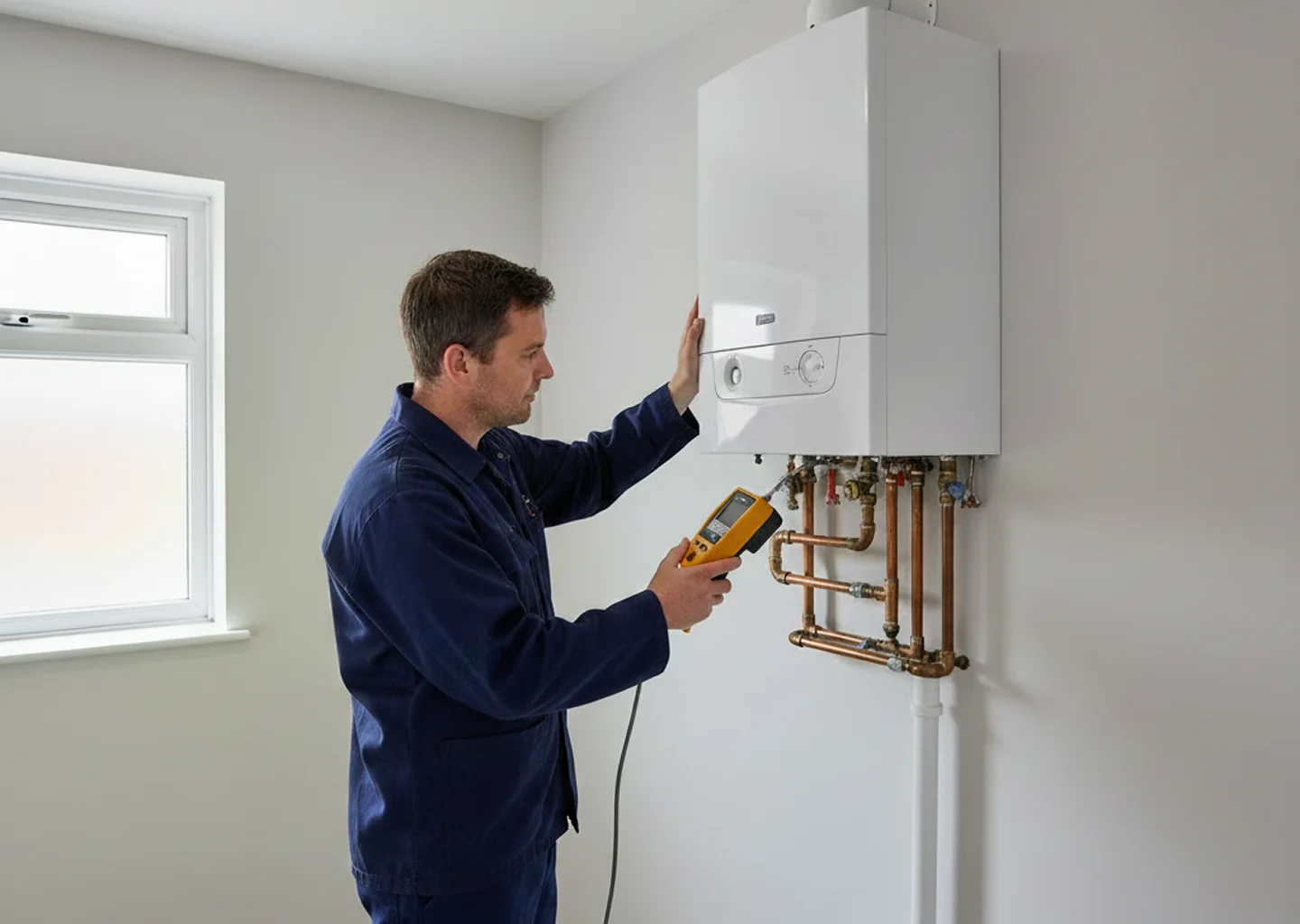
The flue, gas pipework, ventilation arrangements and combustion checks all contribute to the safe operation of the appliance. These are technical aspects that should be assessed and completed by a suitably qualified professional rather than judged by appearance alone.
For anyone arranging gas boiler installation Glasgow, understanding these checks can make it easier to recognise a thorough installation and know what questions to ask before the work is signed off.
If you are planning a gas boiler replacement and want to understand what the installation should involve, contact Origin GPH for practical advice and a tailored quotation.
Why are flue checks so important?
The flue is one of the most important safety components of a gas boiler installation. Its job is to carry combustion products away from the appliance and discharge them safely outside the property.
A flue must be suitable for the particular boiler and installed according to the manufacturer’s requirements and relevant regulations. Its route, connections, support and termination all need to be considered.
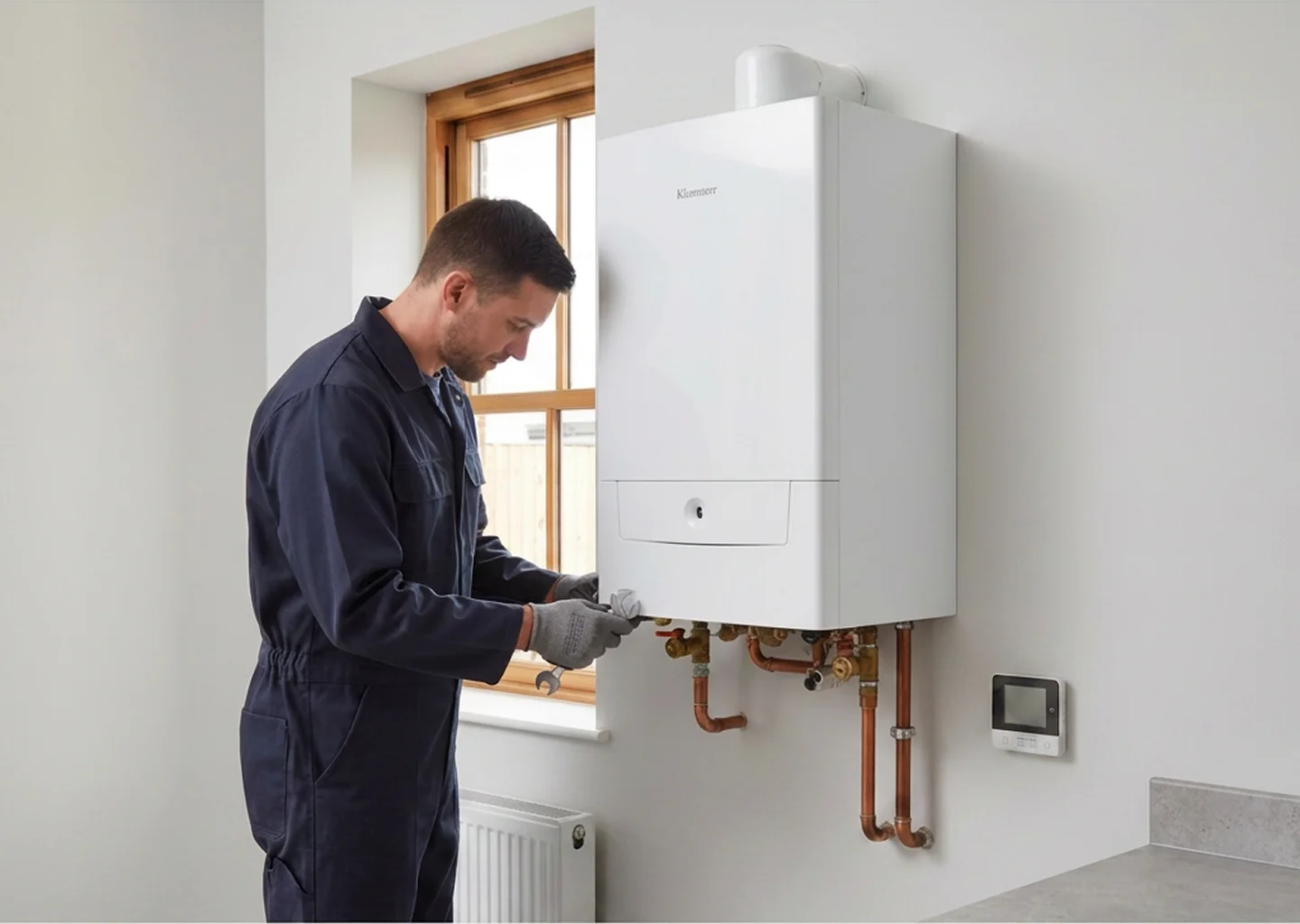
A professional gas boiler installation company should therefore inspect and verify the flue rather than simply connecting the new boiler to whatever arrangement was used by the previous appliance.
The installation may also require consideration of access for future inspection and servicing.
What should a flue inspection cover?
The exact requirements vary depending on the boiler and property, but a professional installation should consider several key points.
These can include:
- Whether the flue is suitable for the boiler model.
- Whether the flue has been correctly assembled.
- Whether connections are secure.
- Whether the flue is appropriately supported.
- Whether the terminal is correctly positioned.
- Whether the route is unobstructed.
- Whether the installation follows the manufacturer’s instructions.
- Whether the flue can be inspected and maintained appropriately.
The Gas Safe Register advises that gas appliances and their flues should be installed, maintained and repaired by appropriately qualified Gas Safe registered engineers.
A homeowner should never attempt to dismantle, modify or test a boiler flue themselves.
Which fuel powers your boiler?
It just takes 2 minutes
And then you can book a free consultation
How does ventilation affect gas boiler safety?
Ventilation requirements depend on the type of appliance and the room or location in which it is installed.
Modern room-sealed boilers generally draw combustion air from outside through a dedicated flue system, which is different from older open-flued appliances that may rely on air from the room.
This does not mean ventilation can simply be ignored. The installer needs to understand the specific appliance and installation arrangement and follow the applicable requirements.
Where ventilation is required, blocking or reducing an existing ventilation opening without professional advice can create a safety risk.
The Health and Safety Executive advises that gas appliances need an adequate supply of air where required for safe combustion and that flues must safely remove combustion products.
What safety checks should happen after installation?
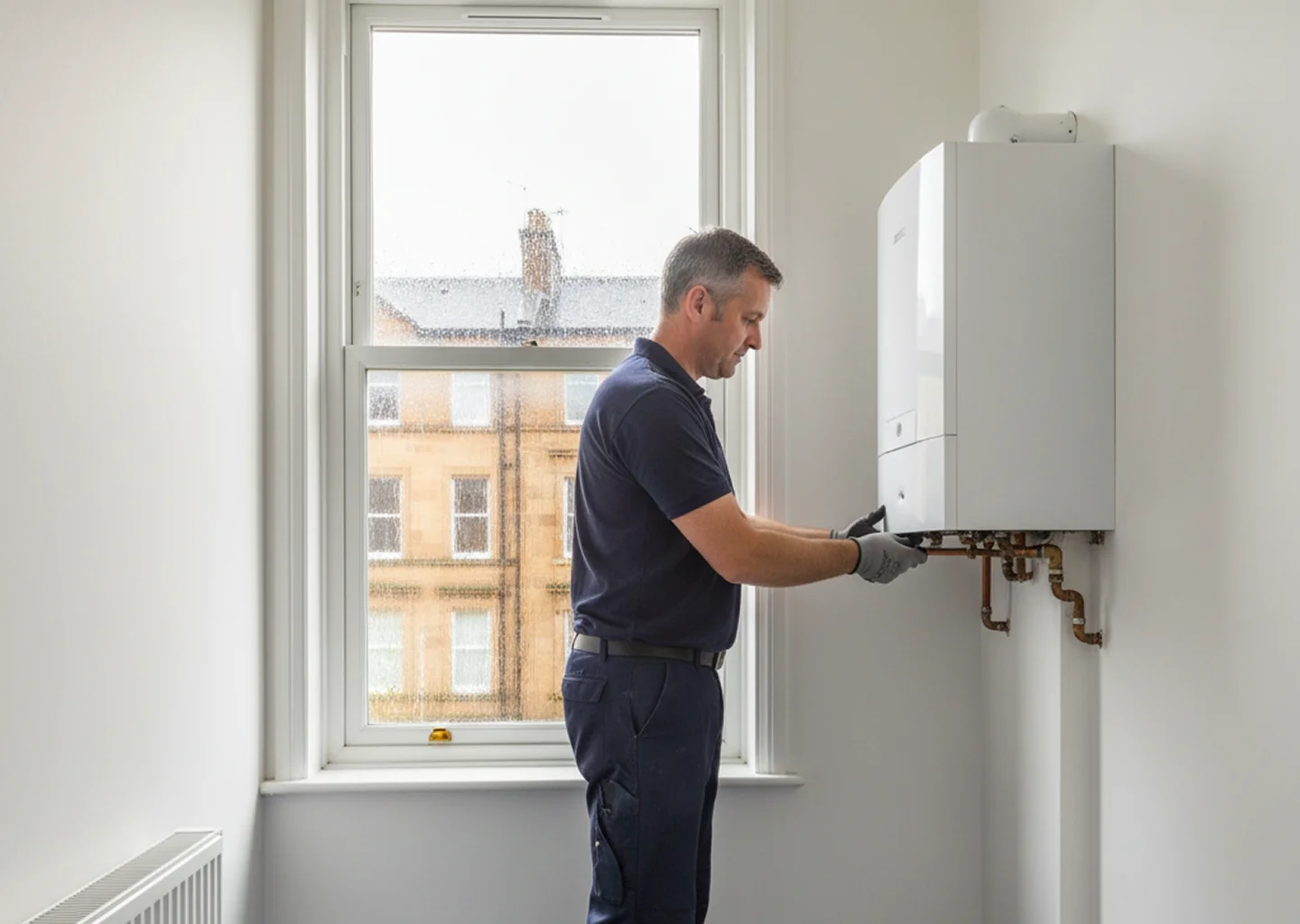
Once the boiler has been installed, the engineer should carry out the checks required to confirm that the appliance is operating safely.
This can involve testing the installation and appliance according to the manufacturer’s commissioning procedure.
Relevant areas can include:
|
Check |
Why it matters |
|
Gas supply |
Confirms the appliance receives an appropriate gas supply |
|
Flue |
Ensures combustion products can be safely discharged |
|
Combustion |
Confirms the appliance is operating correctly |
|
Boiler operation |
Checks the appliance responds as expected |
|
Heating circuit |
Confirms the heating system operates correctly |
|
Hot water |
Checks hot water production where applicable |
|
Controls |
Confirms thermostats and controls operate correctly |
|
Condensate |
Ensures condensate can drain appropriately |
|
Safety devices |
Confirms relevant safety functions operate correctly |
The exact procedure depends on the boiler manufacturer and installation. A professional engineer should follow the appliance instructions rather than rely on a generic checklist.
What is a combustion check?
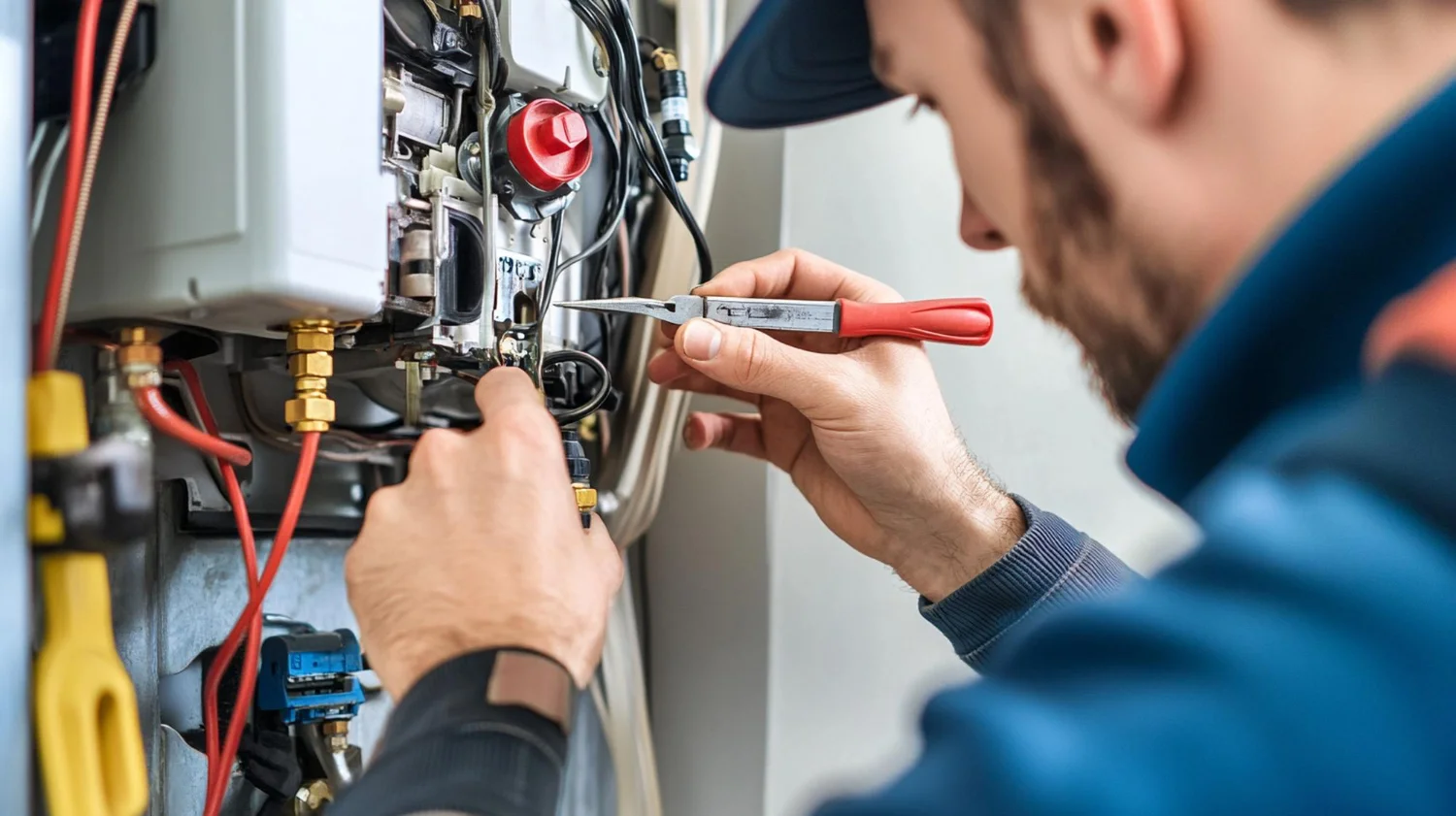
Combustion checks help confirm that the gas appliance is burning fuel correctly and operating within the manufacturer’s specified parameters.
These checks require specialist equipment and knowledge. They are not something a homeowner can reliably assess by looking at the boiler flame or listening to the appliance.
The engineer may use a flue gas analyser as part of the commissioning process. The resulting measurements help assess whether the appliance is operating correctly.
This is another reason why choosing a suitably qualified installer matters. Proper testing provides evidence that the appliance has been commissioned correctly rather than simply switched on.
Should the existing gas pipework be checked?
Yes. Replacing a boiler provides an opportunity to assess whether the existing gas installation is suitable for the new appliance.
The installer needs to consider the gas supply, pipework arrangement and requirements of the replacement boiler. The correct approach depends on the appliance and existing installation.
A larger or differently specified boiler may have different requirements from the appliance it replaces. Simply assuming that existing pipework can always be reused is therefore not appropriate.
Any changes to gas pipework should be carried out by an appropriately qualified Gas Safe registered engineer.
Origin GPH can assess the practical requirements of your heating installation and explain what work may be necessary before a replacement boiler is fitted. Speak to our team if you would like advice based on your property.
What happens if the flue route needs to change?
A replacement boiler does not always have to use exactly the same flue route as the old appliance.
The new boiler may have different requirements, or the existing flue arrangement may not be suitable for reuse. In some properties, the installer may need to alter the route or termination position.
This should be considered during the planning stage rather than treated as an unexpected problem on installation day.
A professional survey can help identify potential complications before work begins and make the quotation more transparent.
For homeowners, the important point is simple: the flue should be designed around the new appliance and the property, not forced into an unsuitable existing arrangement.
What should the homeowner be told at handover?
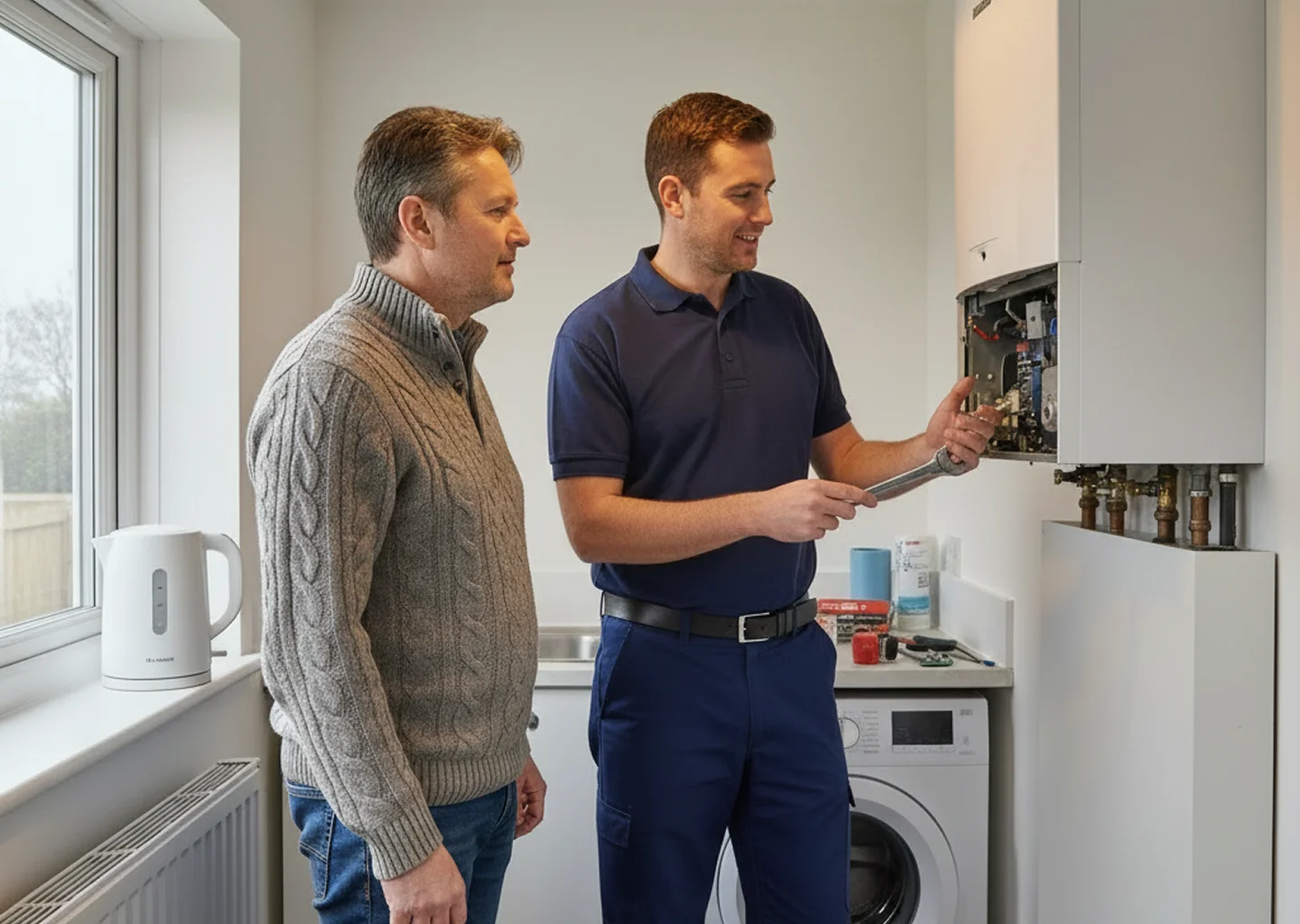
Safety checks are only part of a good installation. The final handover should also leave the homeowner with a clear understanding of the new boiler.
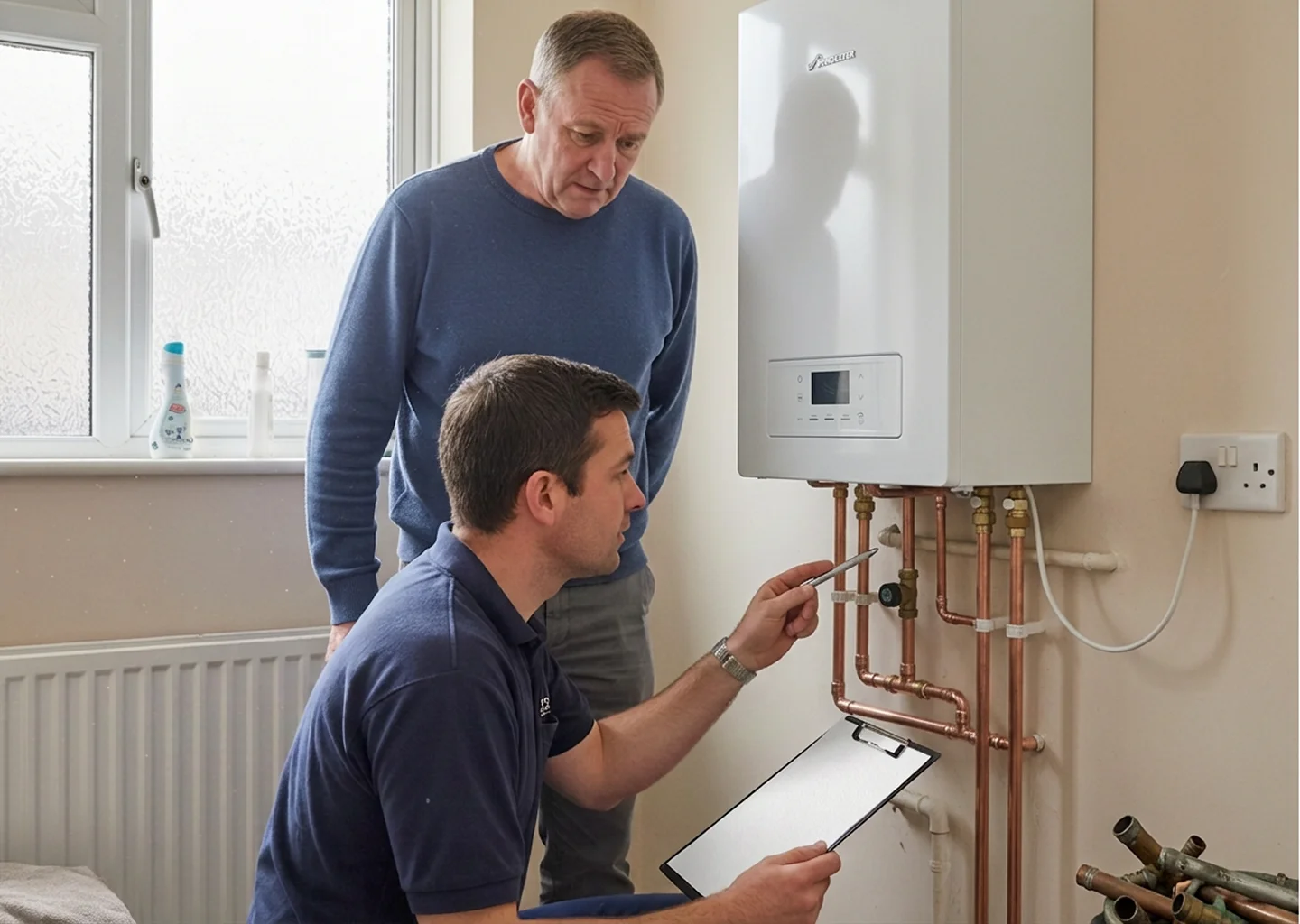
The installer should explain the basic controls and operation and provide the relevant documentation.
You should understand:
- How to operate the heating.
- How to adjust the thermostat.
- How to control hot water where applicable.
- What normal system pressure means.
- What to do if a fault code appears.
- When servicing should be arranged.
- Where to find the boiler instructions.
- Which warranty and installation records should be kept.
Benchmark’s guidance highlights the importance of commissioning and providing homeowners with information about operating their heating appliance.
What are signs that a gas boiler installation needs further attention?
Some issues are obvious, while others are not.
You should ask questions if:
- The installer cannot explain what safety checks were completed.
- The flue arrangement has not been discussed.
- The boiler repeatedly displays fault codes.
- Controls have not been tested.
- The system has not been demonstrated.
- Relevant documentation has not been provided.
- The installer cannot explain the warranty arrangements.
- You have concerns about the location or condition of the flue.
These signs do not automatically prove that an installation is unsafe. They simply indicate that clarification may be appropriate before approving the completed work.
If you have concerns about gas safety, do not attempt to investigate or modify the appliance yourself. Contact an appropriately qualified professional.
A typical Glasgow installation scenario
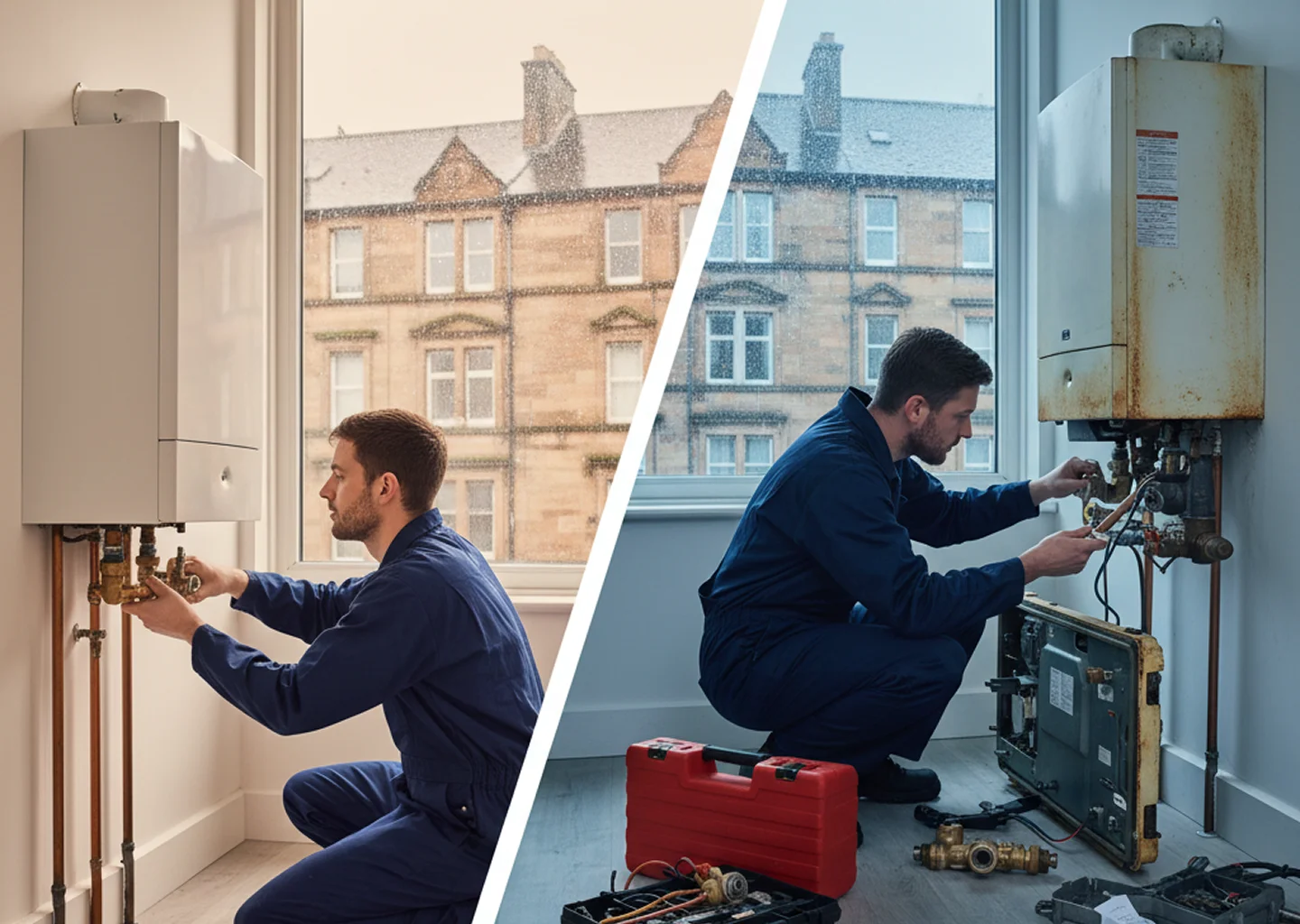
Consider a homeowner replacing an older gas boiler in a Glasgow property. The original appliance has been in place for many years, and the existing flue route is no longer suitable for the chosen replacement.
During the installation assessment, the engineer identifies the issue and plans an appropriate flue arrangement for the new appliance. The gas supply and existing heating system are also assessed before installation begins.
Once the new boiler is fitted, the engineer completes the required commissioning and safety checks, demonstrates the controls and provides the relevant documentation.
The homeowner therefore receives more than a new appliance. They receive a properly assessed and commissioned heating system with a clear handover.
How should you choose a gas boiler installer?
Look beyond the headline installation price.
A suitable installer should be able to explain the proposed boiler, installation requirements, flue arrangements and commissioning process in straightforward language.
For gas work, check that the engineer is appropriately qualified and registered with Gas Safe. The Gas Safe Register provides a way for homeowners to check whether a business or engineer is registered for the relevant gas work.
A clear quotation should also explain what is included, particularly where changes to pipework, controls, flue arrangements or other installation components may be required.
Frequently Asked Questions
A quality gas boiler installation is about far more than connecting a new appliance to existing pipes. Flue arrangements, gas supply, ventilation where required, combustion performance, controls and commissioning all need appropriate attention.
When arranging gas boiler installation Glasgow, homeowners should feel comfortable asking what safety and commissioning checks are included and what documentation will be provided afterwards.
A carefully planned installation and thorough handover provide much greater confidence than simply choosing an appliance based on price. Origin GPH can offer practical guidance based on the property, existing heating system and requirements of the new boiler.
If you are considering a gas boiler replacement, contact Origin GPH to discuss your requirements and request a tailored quotation from the team.
Related articles
Which fuel powers your boiler?
At a glance
The flue, gas pipework, ventilation arrangements and combustion checks all contribute to the safe operation of the appliance. These are technical aspects that should be assessed and completed by a suitably qualified professional rather than judged by appearance alone.
For anyone arranging gas boiler installation Glasgow, understanding these checks can make it easier to recognise a thorough installation and know what questions to ask before the work is signed off.
If you are planning a gas boiler replacement and want to understand what the installation should involve, contact Origin GPH for practical advice and a tailored quotation.
Why are flue checks so important?
The flue is one of the most important safety components of a gas boiler installation. Its job is to carry combustion products away from the appliance and discharge them safely outside the property.
A flue must be suitable for the particular boiler and installed according to the manufacturer’s requirements and relevant regulations. Its route, connections, support and termination all need to be considered.
A professional gas boiler installation company should therefore inspect and verify the flue rather than simply connecting the new boiler to whatever arrangement was used by the previous appliance.
The installation may also require consideration of access for future inspection and servicing.
What should a flue inspection cover?
The exact requirements vary depending on the boiler and property, but a professional installation should consider several key points.
These can include:
- Whether the flue is suitable for the boiler model.
- Whether the flue has been correctly assembled.
- Whether connections are secure.
- Whether the flue is appropriately supported.
- Whether the terminal is correctly positioned.
- Whether the route is unobstructed.
- Whether the installation follows the manufacturer’s instructions.
- Whether the flue can be inspected and maintained appropriately.
The Gas Safe Register advises that gas appliances and their flues should be installed, maintained and repaired by appropriately qualified Gas Safe registered engineers.
A homeowner should never attempt to dismantle, modify or test a boiler flue themselves.
Which fuel powers your boiler?
It just takes 2 minutes
And then you can book a free consultation
How does ventilation affect gas boiler safety?
Ventilation requirements depend on the type of appliance and the room or location in which it is installed.
Modern room-sealed boilers generally draw combustion air from outside through a dedicated flue system, which is different from older open-flued appliances that may rely on air from the room.
This does not mean ventilation can simply be ignored. The installer needs to understand the specific appliance and installation arrangement and follow the applicable requirements.
Where ventilation is required, blocking or reducing an existing ventilation opening without professional advice can create a safety risk.
The Health and Safety Executive advises that gas appliances need an adequate supply of air where required for safe combustion and that flues must safely remove combustion products.
What safety checks should happen after installation?
Once the boiler has been installed, the engineer should carry out the checks required to confirm that the appliance is operating safely.
This can involve testing the installation and appliance according to the manufacturer’s commissioning procedure.
Relevant areas can include:
|
Check |
Why it matters |
|
Gas supply |
Confirms the appliance receives an appropriate gas supply |
|
Flue |
Ensures combustion products can be safely discharged |
|
Combustion |
Confirms the appliance is operating correctly |
|
Boiler operation |
Checks the appliance responds as expected |
|
Heating circuit |
Confirms the heating system operates correctly |
|
Hot water |
Checks hot water production where applicable |
|
Controls |
Confirms thermostats and controls operate correctly |
|
Condensate |
Ensures condensate can drain appropriately |
|
Safety devices |
Confirms relevant safety functions operate correctly |
The exact procedure depends on the boiler manufacturer and installation. A professional engineer should follow the appliance instructions rather than rely on a generic checklist.
What is a combustion check?
Combustion checks help confirm that the gas appliance is burning fuel correctly and operating within the manufacturer’s specified parameters.
These checks require specialist equipment and knowledge. They are not something a homeowner can reliably assess by looking at the boiler flame or listening to the appliance.
The engineer may use a flue gas analyser as part of the commissioning process. The resulting measurements help assess whether the appliance is operating correctly.
This is another reason why choosing a suitably qualified installer matters. Proper testing provides evidence that the appliance has been commissioned correctly rather than simply switched on.
Should the existing gas pipework be checked?
Yes. Replacing a boiler provides an opportunity to assess whether the existing gas installation is suitable for the new appliance.
The installer needs to consider the gas supply, pipework arrangement and requirements of the replacement boiler. The correct approach depends on the appliance and existing installation.
A larger or differently specified boiler may have different requirements from the appliance it replaces. Simply assuming that existing pipework can always be reused is therefore not appropriate.
Any changes to gas pipework should be carried out by an appropriately qualified Gas Safe registered engineer.
Origin GPH can assess the practical requirements of your heating installation and explain what work may be necessary before a replacement boiler is fitted. Speak to our team if you would like advice based on your property.
What happens if the flue route needs to change?
A replacement boiler does not always have to use exactly the same flue route as the old appliance.
The new boiler may have different requirements, or the existing flue arrangement may not be suitable for reuse. In some properties, the installer may need to alter the route or termination position.
This should be considered during the planning stage rather than treated as an unexpected problem on installation day.
A professional survey can help identify potential complications before work begins and make the quotation more transparent.
For homeowners, the important point is simple: the flue should be designed around the new appliance and the property, not forced into an unsuitable existing arrangement.
What should the homeowner be told at handover?
Safety checks are only part of a good installation. The final handover should also leave the homeowner with a clear understanding of the new boiler.
The installer should explain the basic controls and operation and provide the relevant documentation.
You should understand:
- How to operate the heating.
- How to adjust the thermostat.
- How to control hot water where applicable.
- What normal system pressure means.
- What to do if a fault code appears.
- When servicing should be arranged.
- Where to find the boiler instructions.
- Which warranty and installation records should be kept.
Benchmark’s guidance highlights the importance of commissioning and providing homeowners with information about operating their heating appliance.
What are signs that a gas boiler installation needs further attention?
Some issues are obvious, while others are not.
You should ask questions if:
- The installer cannot explain what safety checks were completed.
- The flue arrangement has not been discussed.
- The boiler repeatedly displays fault codes.
- Controls have not been tested.
- The system has not been demonstrated.
- Relevant documentation has not been provided.
- The installer cannot explain the warranty arrangements.
- You have concerns about the location or condition of the flue.
These signs do not automatically prove that an installation is unsafe. They simply indicate that clarification may be appropriate before approving the completed work.
If you have concerns about gas safety, do not attempt to investigate or modify the appliance yourself. Contact an appropriately qualified professional.
A typical Glasgow installation scenario
Consider a homeowner replacing an older gas boiler in a Glasgow property. The original appliance has been in place for many years, and the existing flue route is no longer suitable for the chosen replacement.
During the installation assessment, the engineer identifies the issue and plans an appropriate flue arrangement for the new appliance. The gas supply and existing heating system are also assessed before installation begins.
Once the new boiler is fitted, the engineer completes the required commissioning and safety checks, demonstrates the controls and provides the relevant documentation.
The homeowner therefore receives more than a new appliance. They receive a properly assessed and commissioned heating system with a clear handover.
How should you choose a gas boiler installer?
Look beyond the headline installation price.
A suitable installer should be able to explain the proposed boiler, installation requirements, flue arrangements and commissioning process in straightforward language.
For gas work, check that the engineer is appropriately qualified and registered with Gas Safe. The Gas Safe Register provides a way for homeowners to check whether a business or engineer is registered for the relevant gas work.
A clear quotation should also explain what is included, particularly where changes to pipework, controls, flue arrangements or other installation components may be required.
Frequently Asked Questions
A quality gas boiler installation is about far more than connecting a new appliance to existing pipes. Flue arrangements, gas supply, ventilation where required, combustion performance, controls and commissioning all need appropriate attention.
When arranging gas boiler installation Glasgow, homeowners should feel comfortable asking what safety and commissioning checks are included and what documentation will be provided afterwards.
A carefully planned installation and thorough handover provide much greater confidence than simply choosing an appliance based on price. Origin GPH can offer practical guidance based on the property, existing heating system and requirements of the new boiler.
If you are considering a gas boiler replacement, contact Origin GPH to discuss your requirements and request a tailored quotation from the team.