New Combi Boiler Glasgow: Upgrade Signs Before Your Heating Fails
A combi boiler can quietly become less reliable long before it stops working altogether. You may notice that the radiators take longer to warm up, the shower temperature fluctuates or the boiler needs more frequent repairs. These changes are easy to dismiss when the system still produces heat.

Why you can trust our content
We understand that the boiler industry can be confusing, with plenty of outdated or misleading information. That’s why we rely only on trusted, proven sources to guide our advice and installations:
However, repeated warning signs can indicate that replacement is becoming more sensible than continuing with repairs. Recognising them early gives you time to assess your options without waiting for a complete heating failure.
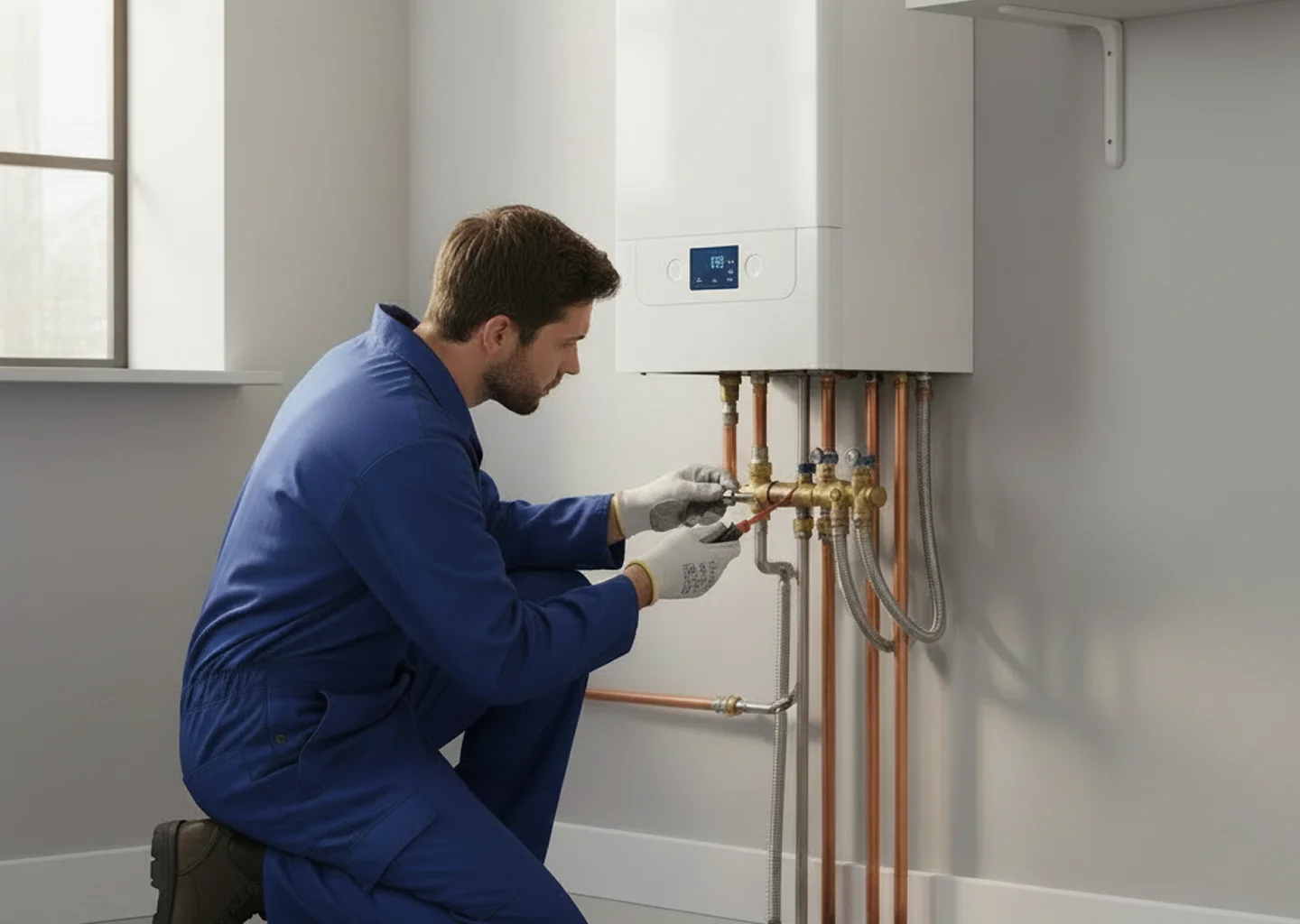
If your boiler has become increasingly unreliable, the team at Origin GPH can assess its condition and help you understand whether repair or replacement is the more practical option.
What Are the Main Signs That a Combi Boiler Needs Replacing?
The strongest indication is usually not one isolated fault but a pattern of declining performance.
Common signs include:
- Frequent breakdowns
- Increasing repair bills
- Fluctuating hot water temperature
- Radiators taking longer to heat
- Unusual banging, humming or whistling noises
- Boiler pressure repeatedly dropping
- Higher energy consumption
- Difficulty finding replacement parts
- A system that struggles to meet the household’s current demand
An individual problem may be repairable. The bigger question is whether continuing to repair an ageing appliance represents good value over the longer term.
Is Frequent Boiler Repair a Sign That Replacement Is Due?
Frequent repairs can be an important warning sign, particularly when faults begin occurring closer together.
A boiler may develop one inexpensive fault during its lifetime without needing replacement. However, if several components are failing or repair costs are steadily increasing, it is worth looking at the wider condition of the appliance.
A useful comparison is the cost of maintaining the existing boiler against the expected reliability and efficiency of a replacement. This does not mean automatically choosing a new boiler every time something goes wrong. It means considering the complete picture.
What kind of fuel does your boiler use?
Mains Gas
LPG
It just takes 2 minutes
And then you can book a free consultation
Could Poor Heating Performance Mean Your Combi Boiler Is Ageing?
Yes, although poor heating performance does not always mean the boiler itself needs replacing.
Radiators that are slow to heat or rooms that remain cold can be caused by several issues, including circulation problems, sludge, incorrect system balancing, faulty controls or boiler performance.
Before deciding on replacement, an installer should investigate the cause.
If the appliance is already ageing and the investigation reveals multiple problems, replacement may become the more sensible option. If the boiler itself is healthy, servicing or system improvements could potentially resolve the issue.
When Should You Consider a New Combi Boiler?
There is no universal replacement age because boilers experience different levels of use and maintenance. Instead, homeowners should look at performance, reliability and suitability.
A new combi boiler Glasgow homeowners are considering may be worth investigating when the current appliance:
- Requires repeated repairs
- Has become unreliable
- Struggles with hot water demand
- Is becoming increasingly inefficient
- Has obsolete or difficult-to-source components
- Is no longer appropriate for the household
Planning at this stage can be much easier than making a decision after an unexpected breakdown.
Does Boiler Efficiency Matter When Deciding Whether to Upgrade?
Efficiency is one of the factors worth considering, but it should not be looked at in isolation.
A modern condensing boiler can potentially use fuel more efficiently than an older appliance, particularly where the existing system has seen years of wear or operates with outdated controls.
However, actual running costs depend on factors such as:
|
Factor |
Why it matters |
|
Boiler efficiency |
Influences how effectively fuel is converted into useful heat |
|
Property size |
Determines the heating demand |
|
Hot water usage |
Affects how hard the boiler needs to work |
|
Heating controls |
Can improve how the system is managed |
|
Insulation |
Reduces heat loss from the property |
|
Boiler output |
Needs to match the home’s requirements |
The right approach is therefore to consider the whole heating system rather than focusing solely on the boiler’s efficiency rating.
Could Your Hot Water Demand Be a Reason to Upgrade?
A combi boiler heats water directly when you turn on a tap, meaning there is no separate hot water cylinder in the traditional arrangement.
This can be convenient, but the system needs to be appropriately sized for the household’s requirements.
If several people regularly use showers, baths and taps at similar times, the existing boiler may struggle to provide the expected flow and temperature. This does not automatically mean a larger boiler is needed. The system should first be assessed to determine whether the appliance is correctly sized and whether a different system arrangement would be more suitable.
A professional installer can help determine whether a combi boiler replacement Glasgow homeowners are considering would adequately meet current and future demand.
If your household’s hot water needs have changed since the existing boiler was installed, speak to Origin GPH for advice on whether your current system remains suitable.
What About Boiler Noise and Pressure Problems?
Unusual noises should not be ignored, especially if they become more frequent.
Banging, kettling, whistling or humming can have different causes. Some may be relatively straightforward to resolve, while others can indicate issues with components or water circulation.
Repeated pressure loss is another reason to arrange an inspection. The pressure may drop because of a leak, a faulty component or another underlying problem.
Rather than repeatedly topping up the pressure without identifying the cause, homeowners should have the system checked by a qualified professional.
Is It Better to Replace a Combi Boiler Before Winter?
For many households, planning ahead is preferable to waiting for the coldest part of the year.
Winter places greater demand on heating systems, so a boiler that is already showing signs of deterioration may be more likely to cause disruption when you need it most.
Replacing an unreliable boiler during a planned period also gives you more time to arrange the work around your household schedule.
There is no requirement to replace an appliance simply because winter is approaching. The important point is to act on genuine warning signs before a minor issue develops into a major inconvenience.
A Typical Upgrade Scenario
Imagine a family in a Glasgow semi-detached home with a combi boiler that has been installed for many years. The boiler still works, but it has required two repairs recently and the hot water temperature has become inconsistent.
Rather than waiting for the system to fail, the homeowners arrange an assessment. The installer checks the boiler, controls, pipework and heating requirements and identifies that the existing appliance is becoming unreliable.
The family can then compare repair and replacement options while the heating is still operational. This gives them time to plan the installation and avoid making a rushed decision during a winter breakdown.
How Can You Plan a Combi Boiler Upgrade Properly?
A successful replacement starts with understanding the property and how the heating system is currently used.
Before committing to an installation, consider:
- Current boiler performance
- Repair history
- Household heating requirements
- Hot water demand
- Existing controls
- Boiler location
- Installation requirements
- Expected long-term use
An assessment should also establish whether replacing the boiler alone is appropriate or whether other parts of the heating system require attention.
If you are considering a new combi boiler Glasgow homeowners can depend on, Origin GPH can provide tailored advice based on your property and heating requirements. Contact the team to discuss your options and request a bespoke quote.
Frequently Asked Questions
A boiler does not have to stop working completely before replacement becomes worth considering. Frequent faults, inconsistent performance, increasing repair costs and changing household requirements can all be reasons to investigate an upgrade.
The key is to look at the boiler as part of the wider heating system. Professional assessment can establish whether the current appliance still represents a sensible option or whether replacement would provide greater reliability and suitability.
Origin GPH can help homeowners assess their options and plan a replacement around their property’s needs, giving you a more informed route towards dependable heating.
Related articles
What kind of fuel does your boiler use?
Mains Gas
LPG
At a glance
However, repeated warning signs can indicate that replacement is becoming more sensible than continuing with repairs. Recognising them early gives you time to assess your options without waiting for a complete heating failure.
If your boiler has become increasingly unreliable, the team at Origin GPH can assess its condition and help you understand whether repair or replacement is the more practical option.
What Are the Main Signs That a Combi Boiler Needs Replacing?
The strongest indication is usually not one isolated fault but a pattern of declining performance.
Common signs include:
- Frequent breakdowns
- Increasing repair bills
- Fluctuating hot water temperature
- Radiators taking longer to heat
- Unusual banging, humming or whistling noises
- Boiler pressure repeatedly dropping
- Higher energy consumption
- Difficulty finding replacement parts
- A system that struggles to meet the household’s current demand
An individual problem may be repairable. The bigger question is whether continuing to repair an ageing appliance represents good value over the longer term.
Is Frequent Boiler Repair a Sign That Replacement Is Due?
Frequent repairs can be an important warning sign, particularly when faults begin occurring closer together.
A boiler may develop one inexpensive fault during its lifetime without needing replacement. However, if several components are failing or repair costs are steadily increasing, it is worth looking at the wider condition of the appliance.
A useful comparison is the cost of maintaining the existing boiler against the expected reliability and efficiency of a replacement. This does not mean automatically choosing a new boiler every time something goes wrong. It means considering the complete picture.
What kind of fuel does your boiler use?
Mains Gas
LPG
It just takes 2 minutes
And then you can book a free consultation
Could Poor Heating Performance Mean Your Combi Boiler Is Ageing?
Yes, although poor heating performance does not always mean the boiler itself needs replacing.
Radiators that are slow to heat or rooms that remain cold can be caused by several issues, including circulation problems, sludge, incorrect system balancing, faulty controls or boiler performance.
Before deciding on replacement, an installer should investigate the cause.
If the appliance is already ageing and the investigation reveals multiple problems, replacement may become the more sensible option. If the boiler itself is healthy, servicing or system improvements could potentially resolve the issue.
When Should You Consider a New Combi Boiler?
There is no universal replacement age because boilers experience different levels of use and maintenance. Instead, homeowners should look at performance, reliability and suitability.
A new combi boiler Glasgow homeowners are considering may be worth investigating when the current appliance:
- Requires repeated repairs
- Has become unreliable
- Struggles with hot water demand
- Is becoming increasingly inefficient
- Has obsolete or difficult-to-source components
- Is no longer appropriate for the household
Planning at this stage can be much easier than making a decision after an unexpected breakdown.
Does Boiler Efficiency Matter When Deciding Whether to Upgrade?
Efficiency is one of the factors worth considering, but it should not be looked at in isolation.
A modern condensing boiler can potentially use fuel more efficiently than an older appliance, particularly where the existing system has seen years of wear or operates with outdated controls.
However, actual running costs depend on factors such as:
|
Factor |
Why it matters |
|
Boiler efficiency |
Influences how effectively fuel is converted into useful heat |
|
Property size |
Determines the heating demand |
|
Hot water usage |
Affects how hard the boiler needs to work |
|
Heating controls |
Can improve how the system is managed |
|
Insulation |
Reduces heat loss from the property |
|
Boiler output |
Needs to match the home’s requirements |
The right approach is therefore to consider the whole heating system rather than focusing solely on the boiler’s efficiency rating.
Could Your Hot Water Demand Be a Reason to Upgrade?
A combi boiler heats water directly when you turn on a tap, meaning there is no separate hot water cylinder in the traditional arrangement.
This can be convenient, but the system needs to be appropriately sized for the household’s requirements.
If several people regularly use showers, baths and taps at similar times, the existing boiler may struggle to provide the expected flow and temperature. This does not automatically mean a larger boiler is needed. The system should first be assessed to determine whether the appliance is correctly sized and whether a different system arrangement would be more suitable.
A professional installer can help determine whether a combi boiler replacement Glasgow homeowners are considering would adequately meet current and future demand.
If your household’s hot water needs have changed since the existing boiler was installed, speak to Origin GPH for advice on whether your current system remains suitable.
What About Boiler Noise and Pressure Problems?
Unusual noises should not be ignored, especially if they become more frequent.
Banging, kettling, whistling or humming can have different causes. Some may be relatively straightforward to resolve, while others can indicate issues with components or water circulation.
Repeated pressure loss is another reason to arrange an inspection. The pressure may drop because of a leak, a faulty component or another underlying problem.
Rather than repeatedly topping up the pressure without identifying the cause, homeowners should have the system checked by a qualified professional.
Is It Better to Replace a Combi Boiler Before Winter?
For many households, planning ahead is preferable to waiting for the coldest part of the year.
Winter places greater demand on heating systems, so a boiler that is already showing signs of deterioration may be more likely to cause disruption when you need it most.
Replacing an unreliable boiler during a planned period also gives you more time to arrange the work around your household schedule.
There is no requirement to replace an appliance simply because winter is approaching. The important point is to act on genuine warning signs before a minor issue develops into a major inconvenience.
A Typical Upgrade Scenario
Imagine a family in a Glasgow semi-detached home with a combi boiler that has been installed for many years. The boiler still works, but it has required two repairs recently and the hot water temperature has become inconsistent.
Rather than waiting for the system to fail, the homeowners arrange an assessment. The installer checks the boiler, controls, pipework and heating requirements and identifies that the existing appliance is becoming unreliable.
The family can then compare repair and replacement options while the heating is still operational. This gives them time to plan the installation and avoid making a rushed decision during a winter breakdown.
How Can You Plan a Combi Boiler Upgrade Properly?
A successful replacement starts with understanding the property and how the heating system is currently used.
Before committing to an installation, consider:
- Current boiler performance
- Repair history
- Household heating requirements
- Hot water demand
- Existing controls
- Boiler location
- Installation requirements
- Expected long-term use
An assessment should also establish whether replacing the boiler alone is appropriate or whether other parts of the heating system require attention.
If you are considering a new combi boiler Glasgow homeowners can depend on, Origin GPH can provide tailored advice based on your property and heating requirements. Contact the team to discuss your options and request a bespoke quote.
Frequently Asked Questions
A boiler does not have to stop working completely before replacement becomes worth considering. Frequent faults, inconsistent performance, increasing repair costs and changing household requirements can all be reasons to investigate an upgrade.
The key is to look at the boiler as part of the wider heating system. Professional assessment can establish whether the current appliance still represents a sensible option or whether replacement would provide greater reliability and suitability.
Origin GPH can help homeowners assess their options and plan a replacement around their property’s needs, giving you a more informed route towards dependable heating.