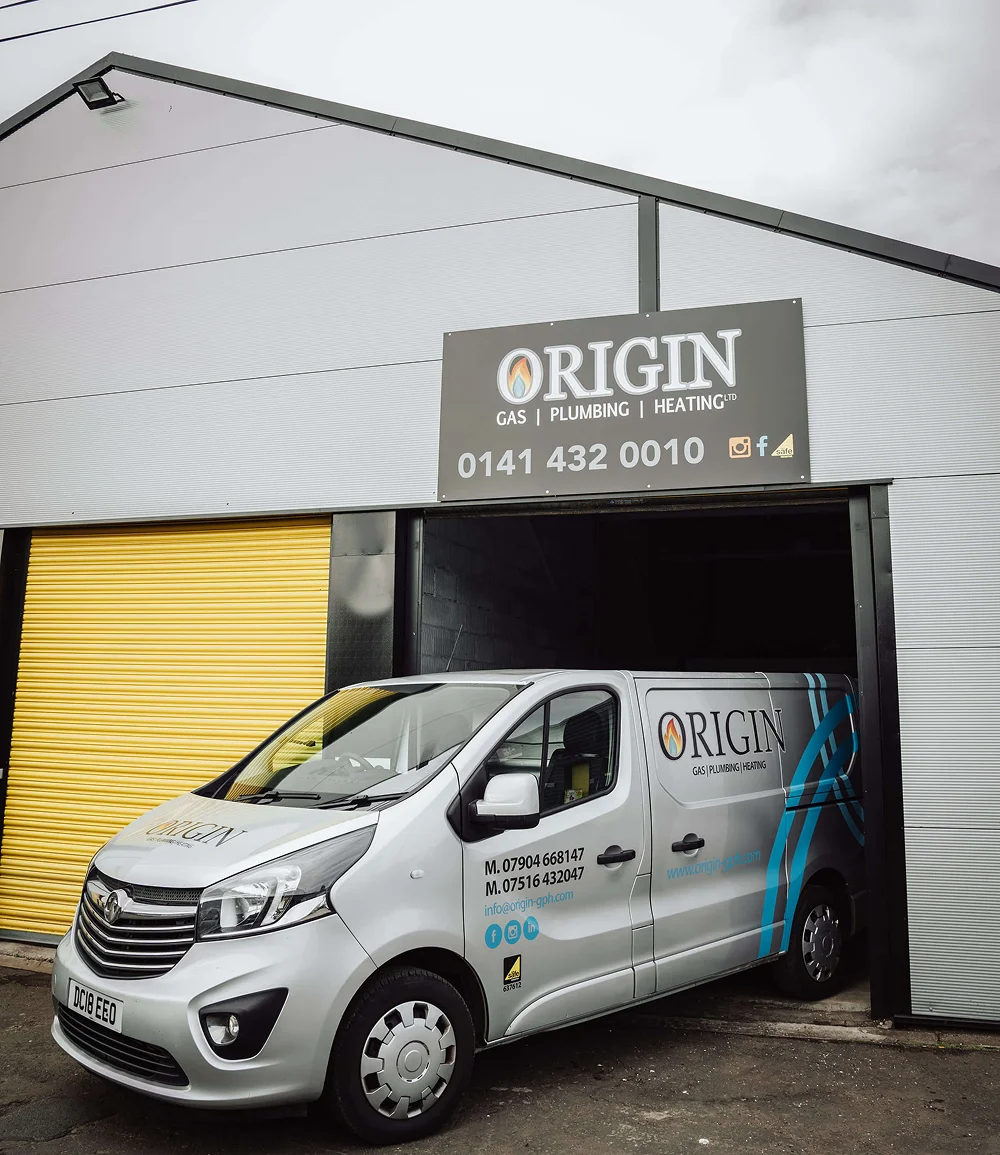
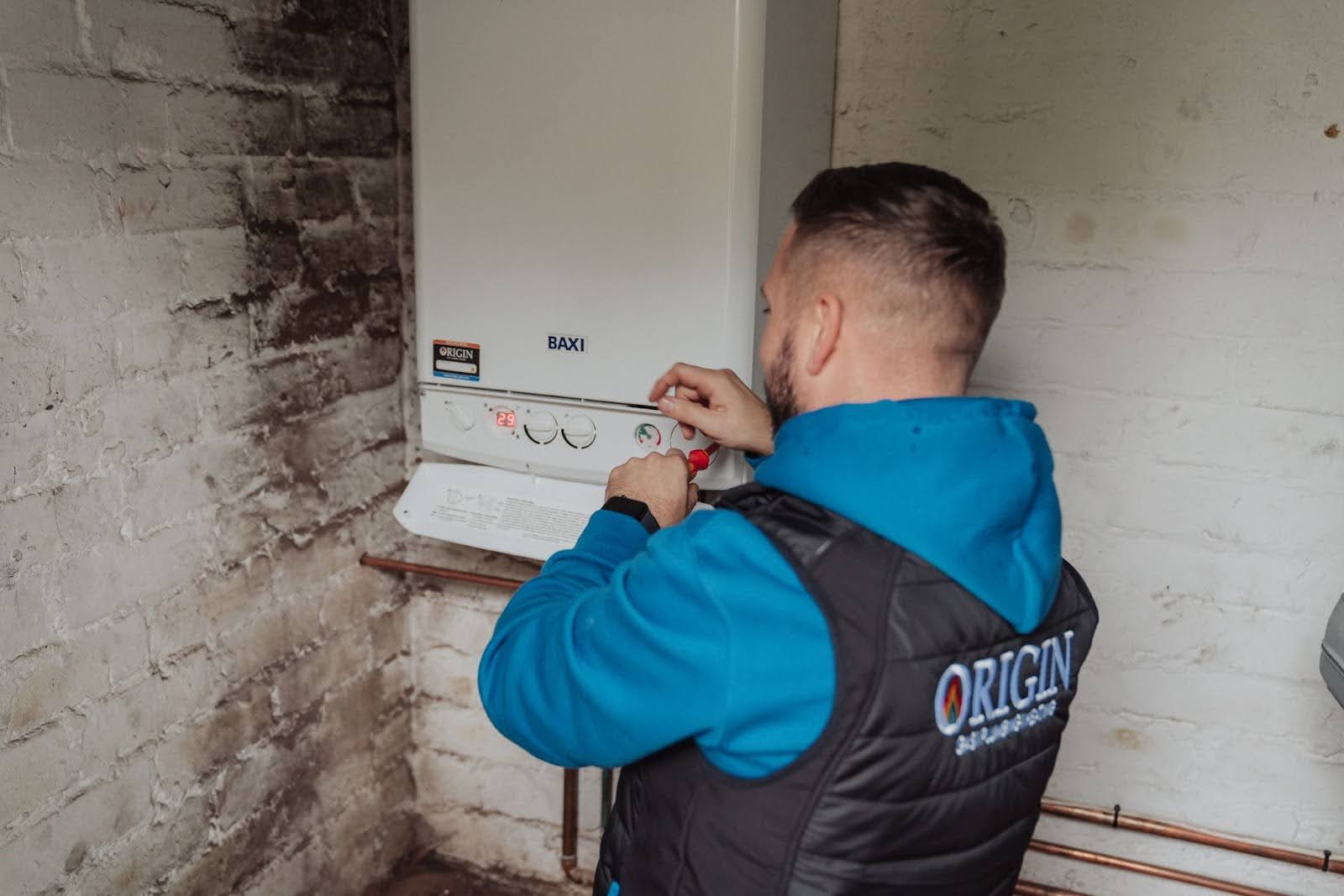
Origin is your local friendly gas engineer in Glasgow. All our staff are qualified gas engineers on the Gas Safe register. Our expert staff are able to offer our services for all boiler repairs, boiler installations, new boilers and central heating services across Glasgow with our 24/7 emergency services.
Our trusted team of professionals can service your boiler to extend its longevity whilst keeping your home free from danger by checking for gas leaks or anything which can cause issues for your boiler and family home. If you find that you need to install a new boiler we can help spread the cost with our flexible payment plan. Additionally, we can recommend a variety of boilers that can meet your home requirements. We can provide a variety of boilers including Vokera, Baxi and Worcester Bosch – we can supply them all.
Origin features a full range of plumbing, heating, and installation solutions throughout Glasgow. Call us today on 0141 432 0010 for a free quote and special savings!
Gas Engineer Glasgow West End
We are able to service the whole of Glasgow and the surrounding areas including: Glasgow West End and Glasgow South. We have a large workforce enabling to cover wide areas to be at your door fast! Fixing your boiler or gas appliance giving you peace of mind. We are open 24 hours a day for all emergency plumbing and gas work.
Gas Safe Registered Engineer Glasgow
At Origin GPH, we go to great lengths to ensure all of our staff are Gas Safe registered. Finding a legitimate, trustworthy Gas Safe registered engineer in Glasgow can be tough. At Origin, we work to ensure our professionalism is second to none and all prices are competitive across the board – check out our 5-star reviews as testament to our service.
The law requires that all gas engineers in the UK are Gas Safe registered. All engineers that are Gas Safe registered would be on the Gas Safe register. To be on this register you must be qualified and show a level of competency that shows you are safe with working with gas products.
A common household appliance we work with are gas boilers. Boilers are a crucial part of having a fully functional home. If your gas boiler does not work it affects the whole family. From the basic essential heat for your home to hot water on demand. It’s important that your gas boiler is well maintained to extend its longevity.
Our gas boiler engineers in Glasgow are Gas Safe registered and qualified to manage all areas of gas appliance work. Gas heating is very common within the average UK. Here at Origin, we can manage all aspects of your gas heating as qualified Gas Safe engineers. Contact us to find out how we can support you.
Gas Fitters Glasgow for Boiler Servicing & Maintenance Plans
It’s important to service your gas appliance because improper maintenance, care and neglect can lead to gas leaks which are often hard to detect. Our expert gas engineers can service your gas boiler fast and efficiently. Servicing your gas appliance can often extend the longevity of your appliance and can help avoid repairs in the future. We have boiler service plans which are cost-effective and offer full protection all year round.
Are you thinking; are boiler plans worth it? If so, check out our guide to help you see the benefits of boiler cover. If you are looking for a gas service engineer in Glasgow look no further. We are professional, honest and reliable engineers in Glasgow.
As well as operating your boiler, we can operate all aspects of gas appliances. Many homes have a cooker that uses gas. If you need help installing your gas cooker don’t hesitate to contact us. We have invested in our staff training to be able to serve our Glasgow community. Being Gas Safe qualified means we meet all professional qualifications and have proven to be safe to manage your gas appliance.
Contact us for a free quote and our friendly staff can help you.
Need Advice Now? Check Out Our Remote Survey Service!
At Origin, we can offer you instant quotes using online video calling! Our team members take a look at the problem using a popular video chat program, including Facetime, Whatsapp, or Zoom to evaluate the problem, determine the cause, and then let you know what needs to be done.
This allows us to get you the information you need quicker and more conveniently than ever before! The best part – all video quotes are currently FREE!
con edison, boiler servicing and repairs, gas engineer, boiler, gas engineer glasgow, gas safe register, water heating, heat, heating system, central heating, radiator, gas leak, energy, thermostat, boiler repairs, commercial gas engineer, boiler repair, boiler installation, glasgow boiler installation, landlord, petroleum, lanarkshire, renfrewshire, boiler replacement, boiler replacement glasgow, emergency boiler repair, glasgow boiler, emergency boiler
gas boiler service glasgow, gas engineer glasgow, central heating engineer glasgow, gas fitter glasgow, heating engineer glasgow, heating engineer glasgow south, gas engineers glasgow, gas safe registered engineer glasgow, gas safe engineer glasgow, local gas engineer, gas engineer jobs glasgow, gas registered engineers, gas boiler engineer glasgow, local gas safe engineer, gas engineer glasgow east end, local gas safe registered engineers, gas installer, gas engineer
Comprehensive Boiler Services
At Origin GPH, we specialise in a wide range of boiler services tailored to meet the diverse needs of our clients. From installations to repairs and regular maintenance, our experienced team ensures that your boiler operates efficiently and safely. We understand that a reliable heating system is essential for your comfort, especially during the colder months.
We offer installations of various boiler brands, including Vokera, Baxi, and Worcester Bosch, ensuring that you have options that suit your home and budget. Our commitment to quality means we also provide thorough maintenance services, helping to extend the lifespan of your boiler and prevent unexpected breakdowns.
Emergency Gas Services
Emergencies can happen at any time, which is why Origin GPH provides 24/7 emergency gas services to address urgent issues promptly. Whether it's a gas leak, boiler breakdown, or any other gas-related emergency, our qualified engineers are just a phone call away, ready to ensure your safety and restore your heating system as quickly as possible.
Our emergency services are designed to offer peace of mind; we prioritise swift response times and effective solutions. By utilising advanced diagnostic tools and techniques, our team can quickly identify the problem and implement the necessary repairs, minimising any disruption to your daily life.
Customer-Centric Approach
At Origin GPH, we pride ourselves on our customer-centric approach, focusing on delivering exceptional service and support to our clients. From the initial consultation to the completion of services, we ensure that our clients feel valued and informed throughout the process. Our goal is to build long-lasting relationships based on trust and satisfaction.
We actively encourage feedback and continuously strive to improve our services based on client experiences. Our high ratings and positive reviews are a testament to our dedication to customer satisfaction, and we aim to exceed expectations in every interaction, whether it's a simple inquiry or a complex installation.
Boiler Financing Options
Understanding that investing in a new boiler can be a significant financial decision, Origin GPH offers flexible financing options to help ease the burden. Our plans are designed to make it easier for homeowners to access the heating solutions they need without compromising their budget. We believe that everyone deserves a safe and efficient heating system.
Our financing options include various payment plans and terms, allowing you to choose what best fits your financial situation. We also provide transparent information regarding costs, ensuring there are no hidden fees, so you can make an informed decision with confidence.