Cost for New Boiler Installation vs Repeated Repairs in Glasgow
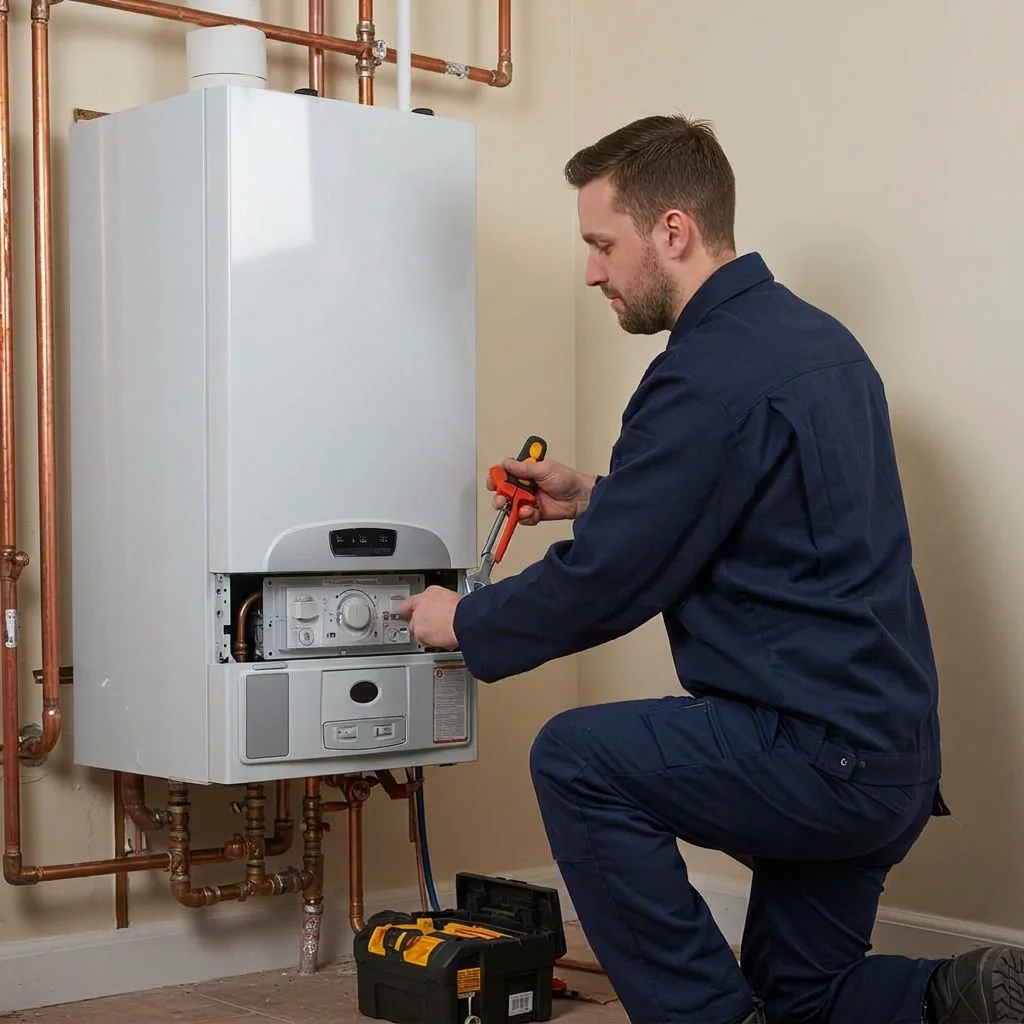
When a boiler develops a fault, repair is often the first option homeowners consider. That can be perfectly sensible when the appliance is relatively reliable and the problem is straightforward. The situation becomes less clear when faults keep returning and repair bills begin to accumulate.

Why you can trust our content
We understand that the boiler industry can be confusing, with plenty of outdated or misleading information. That’s why we rely only on trusted, proven sources to guide our advice and installations:
At that point, the decision is no longer simply about fixing today’s problem. It is about whether continuing to spend money on an ageing appliance makes sense compared with planning a replacement.
Looking at both the immediate expense and likely future costs can help you make a more informed decision.
If your boiler has developed another fault and you are unsure whether to repair or replace it, Origin GPH can assess the system and provide practical advice based on its condition.
Is Repair Always Cheaper Than Replacing a Boiler?
Not necessarily.
A single repair will usually cost less than replacing the entire boiler. However, repeated repairs can change the calculation.
For example, a boiler might need one relatively minor component replaced and then operate reliably for several more years. In another case, several components may begin failing within a short period.
The important question is not simply, “How much is today’s repair?” It is, “What does this repair tell us about the likely future of the appliance?”
What Should You Consider Before Choosing Repair?
Before spending money on another repair, consider the wider condition of the boiler.
Useful questions include:
- How old is the boiler?
- How many repairs has it needed recently?
- Are faults becoming more frequent?
- How much have repairs cost over the past year?
- Are replacement parts readily available?
- Is the boiler still suitable for the household?
- Has heating or hot water performance declined?
- Is another major repair likely to provide good long-term value?
A qualified engineer can help answer these questions after diagnosing the current fault.
Which fuel powers your boiler?
It just takes 2 minutes
And then you can book a free consultation
How Does the Cost of Repeated Repairs Add Up?
Individual repair bills can appear manageable when viewed separately. The picture can look different when several are considered together.
Imagine a boiler requiring multiple call-outs over a relatively short period. Each repair may resolve the immediate fault, but the appliance continues to age and other components may become vulnerable.
This does not mean every repair should be avoided. Some faults are routine and can restore a boiler to reliable operation.
However, when repair frequency increases, it is sensible to compare the cumulative boiler repair cost with the likely investment required for a replacement.
What Makes New Boiler Installation More Expensive?
The price of a replacement depends on the appliance and the work required at the property.
Potential factors include:
|
Factor |
Why it affects the project |
|
Boiler type |
Different systems have different installation requirements |
|
Boiler output |
Must match heating and hot water demand |
|
Location |
Moving an appliance can increase labour and materials |
|
Pipework |
Existing pipework may need alterations |
|
Flue |
The current flue arrangement may not suit the replacement |
|
Controls |
New or upgraded controls may be included |
|
System condition |
Additional remedial work may be required |
|
Removal |
The existing appliance needs to be safely removed |
This is why the cost for new boiler installation cannot be determined accurately from the appliance price alone.
A property assessment is the best way to establish the likely scope of work.
Could a Cheaper Repair Become More Expensive Long Term?
It can.
Suppose an older boiler requires a repair that costs significantly less than replacement. If that repair restores reliable operation for several years, it may be worthwhile.
But if another major fault occurs shortly afterwards, the household may have spent a substantial amount on repairs without resolving the underlying issue of an ageing appliance.
There is no guarantee that replacement will be cheaper in every situation. The decision should be based on the boiler’s condition, repair history and expected reliability.
What Is the Better Option for an Older Boiler?
Age should be considered alongside performance.
An older boiler that receives regular servicing and remains reliable may not need immediate replacement. Conversely, an appliance that is relatively young but repeatedly failing may deserve closer investigation.
Look for a pattern rather than focusing on one event.
Warning signs can include:
- Repeated breakdowns
- Increasing repair frequency
- Unusual noises
- Pressure problems
- Poor heating performance
- Inconsistent hot water
- Difficulty sourcing parts
- Increasing concern about reliability
If several of these are present, replacement may be worth investigating.
Origin GPH can help you compare the practical implications of repair and replacement, so you can make a decision based on your heating system rather than simply the latest fault.
How Can You Compare Repair and Replacement Properly?
A useful comparison should include both immediate and future considerations.
| Repair | Replacement |
| Lower immediate expense | Higher initial investment |
| May restore existing appliance | Provides a new heating appliance |
| Suitable for isolated faults | May be preferable for repeated faults |
| Future repairs remain possible | New warranty arrangements may apply |
| No installation disruption if repair is simple | Installation creates temporary disruption |
| Existing system remains largely unchanged | Opportunity to review controls and system design |
Neither option is automatically right.
The key is to understand the condition of the existing boiler and what you are likely to gain from investing in a replacement.
Could a New Boiler Be More Suitable for Your Current Needs?
Households change over time.
A boiler that was correctly selected when a property had two occupants may no longer be ideal if the household has grown, a bathroom has been added or hot water usage has increased.
Likewise, changes to insulation, heating controls or the property itself can affect heating requirements.
When considering replacement, the installer should assess the current needs of the home rather than simply matching the output of the old appliance.
A Typical Glasgow Replacement Decision
Consider a homeowner whose boiler has required several repairs over the last two years. The latest fault is repairable, but the appliance is also becoming less reliable.
The homeowner asks for an assessment rather than immediately authorising another repair. The installer considers the boiler’s condition, repair history and the household’s heating and hot water requirements.
The homeowner can then compare the immediate repair with the cost for new boiler installation and decide whether to continue maintaining the existing appliance or plan a replacement.
The important part is that the decision is based on the whole picture rather than the latest fault alone.
When Does Replacement Start to Make More Sense?
There is no fixed repair-to-replacement threshold.
Replacement becomes increasingly worth considering when several factors come together:
- The boiler is ageing.
- Faults are becoming more frequent.
- Repair costs are increasing.
- Heating or hot water performance is declining.
- Parts are becoming harder to source.
- The appliance no longer suits household demand.
- You are concerned about another breakdown.
When these factors overlap, another repair may provide only temporary reassurance.
How Can You Avoid Making a Rushed Decision?
The easiest way is to investigate replacement while the existing boiler is still operating.
You can request an assessment, understand the likely installation requirements and obtain a quotation. This does not mean you have to replace the appliance immediately.
It simply gives you information.
If the boiler then develops another fault, you already understand your options and are less likely to make a decision under pressure.
What Should You Ask an Installer?
When discussing repair or replacement, ask for clear answers about:
- The cause of the current fault
- The condition of the boiler
- Likely future reliability
- Repair options
- Replacement options
- Recommended boiler specification
- Installation requirements
- What the quotation includes
- Expected timescale
A good discussion should leave you with a clear understanding of why a particular option has been recommended.
When Should You Get a Replacement Quote?
If your boiler is still operating but has become increasingly unreliable, this is a sensible time to investigate replacement.
Getting a cost for new boiler installation before complete failure gives you an opportunity to understand the likely investment and plan the work around your household.
You can then make the final decision based on the condition of the boiler and the value you expect from continued repairs.
If you are weighing up another repair against replacement, contact Origin GPH for professional guidance. The team can assess your boiler and help you understand the most practical route for your property.
Frequently Asked Questions
Repairing a boiler can be the right decision, particularly when the appliance is in good condition and the fault is isolated. Problems arise when repairs become a regular part of maintaining an ageing system.
Comparing the immediate boiler repair cost with the likely benefits and investment involved in replacement can give you a more realistic view of the situation.
There is no need to replace a boiler unnecessarily. Equally, repeatedly repairing an unreliable appliance without considering its future can leave you spending money without addressing the underlying problem.
Origin GPH can provide clear, professional advice to help homeowners assess their options and decide whether repair or replacement makes better sense for their heating system.
Related articles
Which fuel powers your boiler?
At a glance
At that point, the decision is no longer simply about fixing today’s problem. It is about whether continuing to spend money on an ageing appliance makes sense compared with planning a replacement.
Looking at both the immediate expense and likely future costs can help you make a more informed decision.
If your boiler has developed another fault and you are unsure whether to repair or replace it, Origin GPH can assess the system and provide practical advice based on its condition.
Is Repair Always Cheaper Than Replacing a Boiler?
Not necessarily.
A single repair will usually cost less than replacing the entire boiler. However, repeated repairs can change the calculation.
For example, a boiler might need one relatively minor component replaced and then operate reliably for several more years. In another case, several components may begin failing within a short period.
The important question is not simply, “How much is today’s repair?” It is, “What does this repair tell us about the likely future of the appliance?”
What Should You Consider Before Choosing Repair?
Before spending money on another repair, consider the wider condition of the boiler.
Useful questions include:
- How old is the boiler?
- How many repairs has it needed recently?
- Are faults becoming more frequent?
- How much have repairs cost over the past year?
- Are replacement parts readily available?
- Is the boiler still suitable for the household?
- Has heating or hot water performance declined?
- Is another major repair likely to provide good long-term value?
A qualified engineer can help answer these questions after diagnosing the current fault.
Which fuel powers your boiler?
It just takes 2 minutes
And then you can book a free consultation
How Does the Cost of Repeated Repairs Add Up?
Individual repair bills can appear manageable when viewed separately. The picture can look different when several are considered together.
Imagine a boiler requiring multiple call-outs over a relatively short period. Each repair may resolve the immediate fault, but the appliance continues to age and other components may become vulnerable.
This does not mean every repair should be avoided. Some faults are routine and can restore a boiler to reliable operation.
However, when repair frequency increases, it is sensible to compare the cumulative boiler repair cost with the likely investment required for a replacement.
What Makes New Boiler Installation More Expensive?
The price of a replacement depends on the appliance and the work required at the property.
Potential factors include:
|
Factor |
Why it affects the project |
|
Boiler type |
Different systems have different installation requirements |
|
Boiler output |
Must match heating and hot water demand |
|
Location |
Moving an appliance can increase labour and materials |
|
Pipework |
Existing pipework may need alterations |
|
Flue |
The current flue arrangement may not suit the replacement |
|
Controls |
New or upgraded controls may be included |
|
System condition |
Additional remedial work may be required |
|
Removal |
The existing appliance needs to be safely removed |
This is why the cost for new boiler installation cannot be determined accurately from the appliance price alone.
A property assessment is the best way to establish the likely scope of work.
Could a Cheaper Repair Become More Expensive Long Term?
It can.
Suppose an older boiler requires a repair that costs significantly less than replacement. If that repair restores reliable operation for several years, it may be worthwhile.
But if another major fault occurs shortly afterwards, the household may have spent a substantial amount on repairs without resolving the underlying issue of an ageing appliance.
There is no guarantee that replacement will be cheaper in every situation. The decision should be based on the boiler’s condition, repair history and expected reliability.
What Is the Better Option for an Older Boiler?
Age should be considered alongside performance.
An older boiler that receives regular servicing and remains reliable may not need immediate replacement. Conversely, an appliance that is relatively young but repeatedly failing may deserve closer investigation.
Look for a pattern rather than focusing on one event.
Warning signs can include:
- Repeated breakdowns
- Increasing repair frequency
- Unusual noises
- Pressure problems
- Poor heating performance
- Inconsistent hot water
- Difficulty sourcing parts
- Increasing concern about reliability
If several of these are present, replacement may be worth investigating.
Origin GPH can help you compare the practical implications of repair and replacement, so you can make a decision based on your heating system rather than simply the latest fault.
How Can You Compare Repair and Replacement Properly?
A useful comparison should include both immediate and future considerations.
| Repair | Replacement |
| Lower immediate expense | Higher initial investment |
| May restore existing appliance | Provides a new heating appliance |
| Suitable for isolated faults | May be preferable for repeated faults |
| Future repairs remain possible | New warranty arrangements may apply |
| No installation disruption if repair is simple | Installation creates temporary disruption |
| Existing system remains largely unchanged | Opportunity to review controls and system design |
Neither option is automatically right.
The key is to understand the condition of the existing boiler and what you are likely to gain from investing in a replacement.
Could a New Boiler Be More Suitable for Your Current Needs?
Households change over time.
A boiler that was correctly selected when a property had two occupants may no longer be ideal if the household has grown, a bathroom has been added or hot water usage has increased.
Likewise, changes to insulation, heating controls or the property itself can affect heating requirements.
When considering replacement, the installer should assess the current needs of the home rather than simply matching the output of the old appliance.
A Typical Glasgow Replacement Decision
Consider a homeowner whose boiler has required several repairs over the last two years. The latest fault is repairable, but the appliance is also becoming less reliable.
The homeowner asks for an assessment rather than immediately authorising another repair. The installer considers the boiler’s condition, repair history and the household’s heating and hot water requirements.
The homeowner can then compare the immediate repair with the cost for new boiler installation and decide whether to continue maintaining the existing appliance or plan a replacement.
The important part is that the decision is based on the whole picture rather than the latest fault alone.
When Does Replacement Start to Make More Sense?
There is no fixed repair-to-replacement threshold.
Replacement becomes increasingly worth considering when several factors come together:
- The boiler is ageing.
- Faults are becoming more frequent.
- Repair costs are increasing.
- Heating or hot water performance is declining.
- Parts are becoming harder to source.
- The appliance no longer suits household demand.
- You are concerned about another breakdown.
When these factors overlap, another repair may provide only temporary reassurance.
How Can You Avoid Making a Rushed Decision?
The easiest way is to investigate replacement while the existing boiler is still operating.
You can request an assessment, understand the likely installation requirements and obtain a quotation. This does not mean you have to replace the appliance immediately.
It simply gives you information.
If the boiler then develops another fault, you already understand your options and are less likely to make a decision under pressure.
What Should You Ask an Installer?
When discussing repair or replacement, ask for clear answers about:
- The cause of the current fault
- The condition of the boiler
- Likely future reliability
- Repair options
- Replacement options
- Recommended boiler specification
- Installation requirements
- What the quotation includes
- Expected timescale
A good discussion should leave you with a clear understanding of why a particular option has been recommended.
When Should You Get a Replacement Quote?
If your boiler is still operating but has become increasingly unreliable, this is a sensible time to investigate replacement.
Getting a cost for new boiler installation before complete failure gives you an opportunity to understand the likely investment and plan the work around your household.
You can then make the final decision based on the condition of the boiler and the value you expect from continued repairs.
If you are weighing up another repair against replacement, contact Origin GPH for professional guidance. The team can assess your boiler and help you understand the most practical route for your property.
Frequently Asked Questions
Repairing a boiler can be the right decision, particularly when the appliance is in good condition and the fault is isolated. Problems arise when repairs become a regular part of maintaining an ageing system.
Comparing the immediate boiler repair cost with the likely benefits and investment involved in replacement can give you a more realistic view of the situation.
There is no need to replace a boiler unnecessarily. Equally, repeatedly repairing an unreliable appliance without considering its future can leave you spending money without addressing the underlying problem.
Origin GPH can provide clear, professional advice to help homeowners assess their options and decide whether repair or replacement makes better sense for their heating system.